While Cleaning for Pesach…

This turned up.  

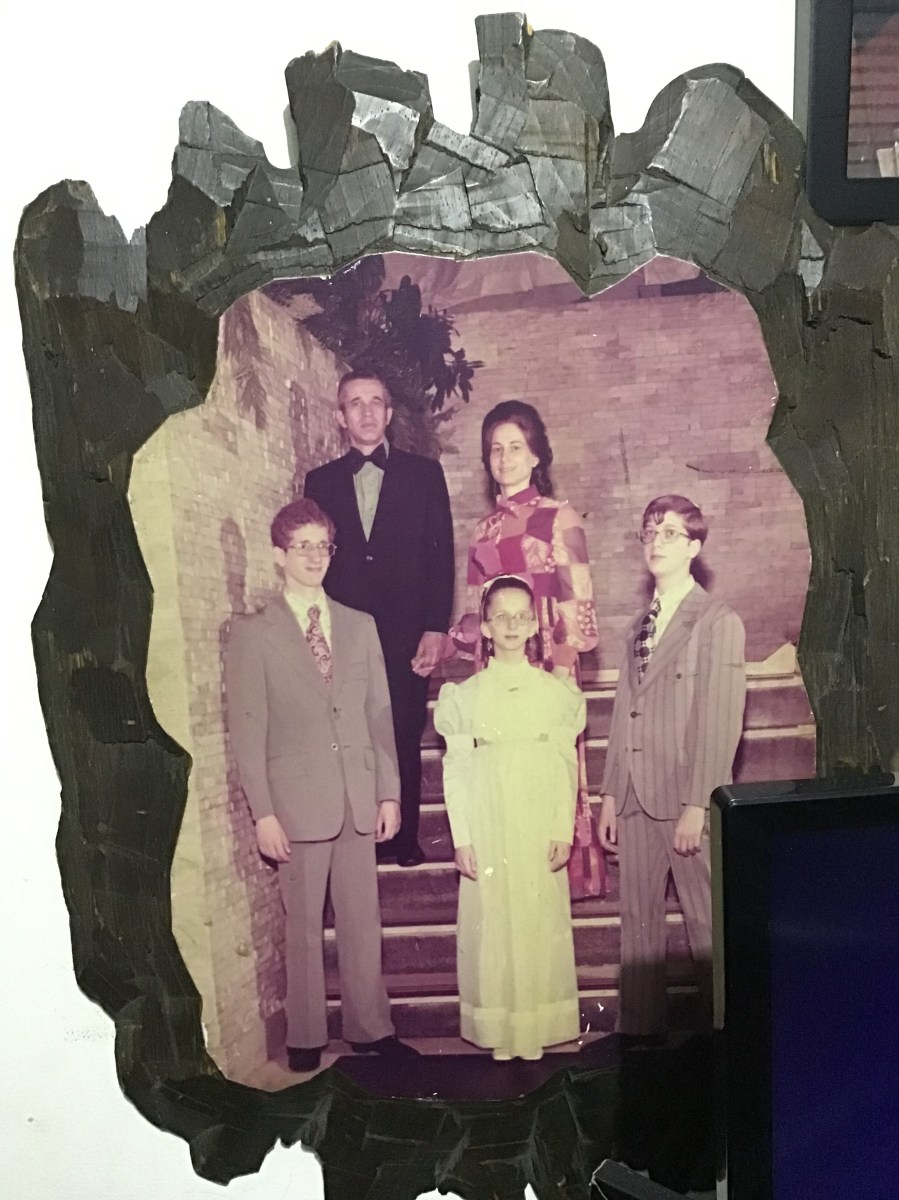
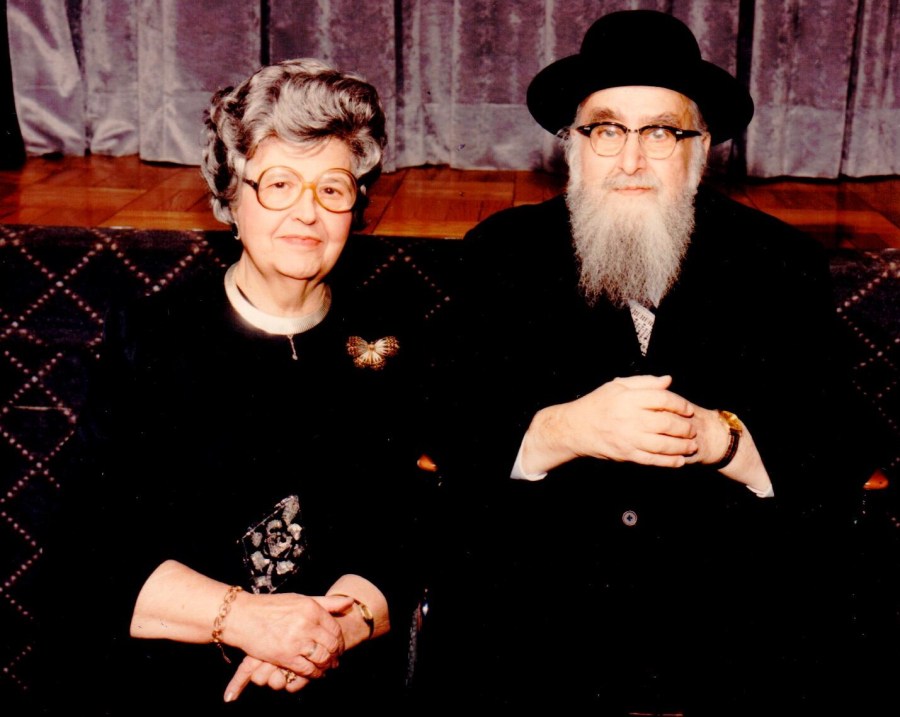
Here is the story. Many years ago, in the early 1970s perhaps, Dad shot a Bar Mitzvah for a local family. When delivering the pictures he included one that he had mounted on a frame that was popular at the time. A frame that looks like it was chiseled off a tree. The type of thing you would put in your 70s living room, above your orange couch, on a paneled wall.  

Though the family did not order the picture, Dad was sure they would take it on this exquisite frame. Turns out, they weren’t biting. 

So, rather than throw it out (or give it to them,) Dad hung it on the wall in his equipment room- the extra bedroom in our apartment. This would be the sample portrait to show customers like all good photography studios keep some on their walls. 

The photo hung on that wall for some 45 years, no one bothered taking it down. So the picture was like a running joke in the family. And if a guest would ask who those people are, we didn’t have a good answer. It remained until we vacated the apartment with Dad’s stroke.   

For a while I kept it on the wall of the den- (my YouTube studio) but there was really no one to get the joke. So it sat behind a bookcase- until now when it became a blog post. Have a Koshern Pesach all. 

KAJ Choir Best Moments

Here are some little tidbits about the choir that I thought to share. 

  1. That time the choir sang in English. In one of the last choral concerts ( “Shiro Vezimro”) directed by Seymour Silbemintz z’l, he added this piece, a ‘canon’ ( also known as a “round”,) that put the Psalm “Hinei MaTov” to a piece of classical music in a two-part round. There were English lyrics like:  

” A Canon is a Melody, you sing a line and you may find it continues endlessly, it may be sung in any key, it could be ‘C’ or even ‘B’, or if you like variety why don’t you try the key of ‘E’, or A or B, it just so happens we’re in  ‘G’ , which is a most delightful key, don’t you agree, the key of ‘G’, it is a most delightful key, or ‘A’ , how will our Canon sound in ‘A’. Hinei ma tov…’ 

  1. That time the choir performance included a classical music interlude. There was a young student from YU in the choir circa 1985- Howie Hochster- and he was classically trained in clarinet. There was also the faithful choir veteran Bob Kosofsky who is a classically trained pianist. They played this. Concert Choir of KAJ 1985. Part 1 
  1. The choir could sometimes come to someone’s home to cheer up a sick person. We did this once for Mr. Shlomovitz z’l. More recently they performed for the one-hundred-year-old fan, Mr. Koenigsburg z’l when he was in the Hebrew Home for the Aged.
  2. The time a Sinatra cover was included at a concert. The famously funny and good-hearted Cantor Seymour Rockoff z’l – who put the words “Boro Park” to Sinatra’s signature ” New York, New York”- was the guest cantor at the concert in 1997. In honor of the occasion, he retrofitted his Yiddish hit “Boro Park” (from the original “Rechnitz Rejects” album, here ) and infused the concert with some comedy….a first! (Remember, the concerts were in Adar.) One attendee told me he felt uncomfortable since the Rav was (as always) in attendance watching the silliness.  
  1. In that concert, a violinist (Stephanie Kurtzman of Riverdale) joined the accompaniment.  In two earlier concerts (83 and 85?) a drummer (local talent Rafi Adler) joined. At the annual dinners, the house orchestra can be heard accompanying as well. Then, there was a concert (1981?) where the choir sang Lewandowski’s Hallelukah. My father brought a large sizzle-ride cymbal. At the song’s crescendo, he reached for it and gave a surprise strike at the cymbal which took the audience by surprise and was a nice touch. (Maybe a cannon ala 1812 Overture would work there as well?) 
  2. A moment of intense community pride. For many years Cantor Joseph Malovany accompanied the choir at concerts. At one concert in the 1980s, the choir performed Mombach’s famous seu sheorim which ends in a high alto reach for the cantor (“Hakovod SE-lah”, famously). At this particular concert, the adrenalin was running as the choir burst their way through the piece, finally approaching the “big moment”. As Malovany handily reached for that note (it’s in the lower part of his range), the audience was already on their feet in applause. Whistles and hearty applause take the song into its closing bars.  
  3. The choir performs for a special retirement. At the breakfast for the retirement of long-time choir leader Mr. Nathan Weis z’l the choir performed two pieces. The first was the traditional (chasidic) pischu li, out of Hallel. Then before bentchin they belted out the Shir Hama’alos to the “Kel Adon” which was introduced to the community from Hamburg by Chazzan Frankel z’l. Of note, the choir made a small breakfast for my father’s retirement. My father requested they sing the standard community Shir Hamalos. And they did! 
  4. There are pieces in the choir repertoire that were written by the director Mr. Seymour Silbermintz z’l specifically for the Breuer’s choir – in the style of the late great composers. Mr. Silbermintz has other songs he wrote over the years sing-along -style some of which have been performed at our concerts. 
  5. In 1998 there were two unique songs that the choir learned. The first was ultimately scratched from the concert. It was called “Al Tashlicheini” and seems to have a modern edge to it. HERE is a recording that is corrupted and was from a rehearsal. Then there was a most unique Carribean-styled tune for Koh Ribon Olam written by the Shul’s beloved Shammos, Mr. Victor S. Perhaps it is mildly influenced by the Hispanic element in Wahington Heights. The choir did perform this at the concert, and Victor did the keyboard accompaniment, HERE
  6. In more recent times, since many have left the neighborhood, the choir has not had concerts- but small appearances. In some of these, the director –Mr. Eric Freeman- has introduced unique pieces, including this one in Ladino.  And this one! Choir of KAJ Sings See The Conquering Hero Comes at Moriah Senior Center  
  7. After many years of performing at our concerts, Chazan Malovani graced a concert in the mid-90s with the anthemic “Shir Hama’alos” (Ps. 128) as sung to Japhet’s specially composed tune. Chazan MAlovani added a lot of flair (too much?) to the piece, but it was warmly embraced. (Here at 1:20:00 here https://youtu.be/Rn7BsbhXlUU?si=jjC17NrSUZzKArhc
  8. Have a memory or a tidbit to add? Let’s do a follow up…

Exploring a Tune

Here is an interesting nugget that emerged out of a comment on my new website (zemirosaschkenaz.com) this winter.   

I posted a tune for Adon Olam that Dr. Eric Zimmer allowed me to share off of his father’s CD of his Frankfurt memories. In the comment section, someone pointed out that this tune is also on the Spanish-Portugse Chazzanut website. A friend who recently launched a blog for the careful study of minhagim revealed that the tune is written by David Aaron Desola of the Bevis Marks congregation in 19th century London. (See here)  

The original commenter on the post is actually the admin of one of that chazzanut website of Amsterdam and he really opened our eyes, because our resident scholar, Reb Yisroel S. Strauss, informed us that our beloved Chazan Frankel”used that niggun” often.(KAJ uses Adon Olam at the beginning of davening only.) It was later reported by Mr A. Gutmann that it was Chazan Frankel’s choice for the Matnas Yad days of the Shelosh Regalim. The suggestion popped into mind that Chazan Frankel might have known it from Hamburg, which, famously, had a large number of Amsterdam Sephardim. My friend in his blog went with that assumption. (Despite the fact that Henry Zimmer z’l was from Frankfurt, and I don’t believe he learned it in WH from Chazan Frankel. The question then is, did he know it from Frankfurt itself?)  

I bounced this off of Professor Edwin Serrusi in Hebrew University, and here is what he wrote: 

” I do not think that the tune entered the Ashkenazi realm via Amsterdam but via London, where De Sola spent most of his life and where this Adon Olam was composed. Ashkenazi British synagogues (several of which had a strong German affiliation) adopted several Sephardi tunes. My former student and now colleague Dr. Naomi Cohn-Zentner wrote an MA thesis on this phenomenon.” 

This being the case, it is possible that Chazan Frankel picked this up in London – where he spent much of the war. It is also possible that many people in Germany knew it whether via Hamburg or otherwise.  

Take It or Leave It…

this clip from Mishpacha magazine was sent to me by a close friend. I take miracle stories with a grain of salt and always analyze the source. but as the saying goes, “you’ve got to believe it could have been true… “

Night Vision – Mishpacha Magazine

Rav Breuer’s Dream

For all the pünklichkeit for which Rav Breuer and the yekkishe community are known, the one area he was not meticulous about was ending his learning seder on time

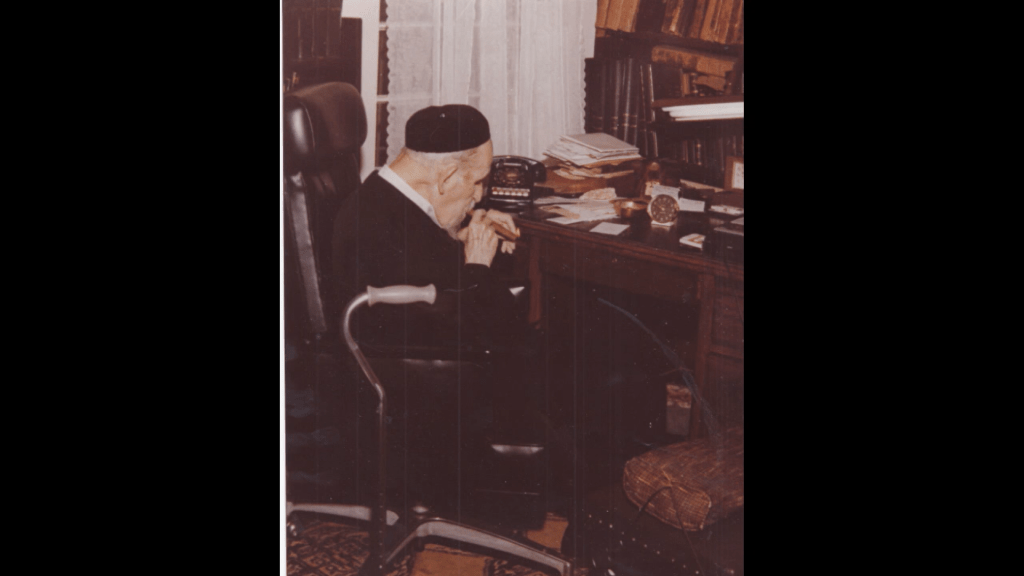
INthe mid-1970s, my father, Rav Yaakov Yitzchok Weinberg z”l, started learning with Rav Dr. Yosef Breuer, the venerated rav of K’hal Adath Jeshurun in Washington Heights, New York. The chavrusashaft began at the behest of Rav Breuer’s family, who sought to set up the elderly rav with a chavrusa so he could maintain his sedorim even as his eyesight waned. Every morning, my father walked to the home of the Rav’s daughter, Meta Bechhofer, at 50 Overlook Terrace, where he would join Rav Breuer in his study for their 10 a.m. sessions.

Surrounded by large tomes of Gemara (one volume on the shared desk, a second on a shelf that pulled out from the desk, and yet another on the stool nearby), the pair would blissfully submerge themselves in the Yam HaTalmud as they methodically made their way through the Gemara, Rashi, Tosafos, and the main Rishonim on each daf, basking in the joy of pure limud haTorah. The session officially went until noon, but for all the pünktlichkeit (punctuality) for which Rav Breuer and the German community are known, the one area he was not meticulous about was ending his learning seder on time.

The very fact that my father and Rav Breuer could learn together was inspiring and wondrous: My father, a Polish Gerrer chassid originally from Lodz, was in his forties. The Rav, a leader and scion of an aristocratic German Jewish family, was already in his nineties. Yet despite their vastly different backgrounds and even a formidable language barrier — my father spoke in the chassidishe Yiddish of his youth and the Rav conversed in a sophisticated German — they transcended the barriers of semantics.

Rav Breuer is remembered for his profound writings, for the large kehillah he built, and for being the foremost expositor of Rav Samson Raphael Hirsch’s hashkafah of both Torah im derech eretz and austritt — Rav Hirsch’s principle of an independent, Torah-true kehillah without any association with Reform Jewry.

But those who knew him well remember Rav Breuer first and foremost as a brilliant talmid chacham and an unbelievable masmid. Before the war, he had served not as rav, but as rosh yeshivah of the Frankfurt yeshivah, devoting himself completely to limud haTorah. Even after assuming the mantle of community leadership, Rav Breuer prioritized limud haTorah for his balabatim and took great nachas when younger members of the kehillah attended the great yeshivos and commited themselves, as he taught, to Torah learning, irrespective of what they did in life.

In the early 1950s, a stream of survivors who had been in DP camps since the war’s end started to trickle into America. Many of them, even those of Polish and Hungarian origin, were attracted to the beautiful kehillah in Washington Heights, including my family. We were welcomed with open arms by Rav Breuer and the kehillah, and I grew up in Washington Heights and attended the “Breuer’s” school.

When we first arrived in the Heights, my father, an outstanding talmid chacham, began learning in the Dombrover Shtiebel. He later joined a chaburah that attended a twice-weekly Gemara shiur given by Rav Breuer in his home. There their relationship was kindled, because even with the age and language barriers, my father understood Rav Breuer. When the Rav’s eyesight weakened to the point that he could no longer read the text of seforim, the Breuer family requested that my father learn regularly with the Rav.

Their chavrusashaft enjoyed not only an unlikely and beautiful camaraderie but also a great deal of siyata d’Shmaya, as one anecdote reveals. It almost went untold — in fact, we learned of it neither from Rav Breuer nor from my father, but from a family friend.

One day, my father and the Rav came across a puzzling kushya. The difficulty consumed the remainder of their seder together, and they left off without resolving it. The next morning, my father arrived as usual at 10 a.m., and as soon as he entered, it was clear that Rav Breuer had been eagerly awaiting his arrival.

“Last night, I had a dream,” the Rav told my father. “The Chasam Sofer came to me and said, ‘I had the same kushya, and I wrote a teretz in my sefer.’ ”

The Rav could barely see at the time, yet he knew exactly where each sefer was. He pointed to the spot on his seforim shrank where a worn copy of Chiddushei Chasam Sofer al HaShas sat. The Rav asked my father to take it down and to turn to the daf they were learning. There, precisely where he anticipated, was an answer to their kushya.

Neither Rav Breuer nor my father felt the need to share the story with their families, that day or ever; the story came to light only after my father met a descendent of the Chasam Sofer who was Rav Breuer’s talmid and mentioned it to him.

The fact that a gadol of a previous generation had come to reveal a teretz to their question was of little import to the Rav and to my father. The main thing was that their kushya was now resolved, and the two chavrusas sat down to continue their seder.

Rachel Elbaum is the general studies principal of Bais Brocho D’Stolin Karlin. She lives in Brooklyn, New York.

Some Tishri Notes

Sometimes I reflect back to a time where religious practice was not as well informed but had a mystique born out of a simplicity. The days when you really anticipated Eliyahu Hanavi would enter your door, like the old man in your hagadah who comes to the home of the pointy yarmulkaed family of the Maxwell House tradition.  

In the 1990s the late Dr. Willie Helmreich wrote how he remembers a simpler time when you would eat a candy bar without a hechsher, just by perusing the ingredients. (This line in his article was taken to task in the Jewish Observer as a yearning for a time of weak amaratzus, understandabely.) I am not pining for uninformed Judaism, just the mystique of it. 

Here are some things that have improved, and others that may have just become more complicated – in mitzvah observance in my years thus far: 

Yom Tov always included one milchige’ meal 

Tashlich was done ON Rosh Hashanah, and not during a Chol Hamoed trip 

Tashlich involved saying three pesukim in Micah, and turning around. There were not people poring over long techinas in their machzorim 

Rosh Hashanah night had one ritual: An apple in the honey…shanah Tova u’metukah. No leeks, fishheads, or placards with conflicting instructions. 

Women wore white. Men wore white ties and yarmulkas. No gold Jewlery. 

Now some of the ritual practice has changed because of proximity to rivers, long yeshivah davenings that go until midafternoon (eliminating the tashlich slot), a need to require the simchas youtov mitzvah of meat and wine.  

On a different note, a Rov in Brooklyn brought up the following question on what he called the minhag of women in German Jewish shuls who bow along with the men in the avodah part of Yom Kippur Musaf. 

The question is: The Piyut says clearly that the “Kohanim and the people sitting in the azara- when they heard the Holy Name uttered by the Kohein….woul bow….”  

The women in the Beis Hamikdash would not be in the “azara”, but in the “ezras nashim” and thus would not bow. Ergo, their bowing in Shul does not accurately replicate the Avodah in the Beis Hamikdash. 

Bouncing this off of  a friend, he believes that we are not looking to make an accurate replication of the avodah, since- for instance- on Sukkos we all circle the almemer, although in the Beis Hamikdash only Kohsnim (albeit, baaleu mum were allowed) could perform Hakofos on Sukkos.  

A short note on Hoshanos. In WH we say Eroch Shuiey on the first day of sukkos, unlike the standard minhag found in an Artscroll machzor. I think this practice has good cause. Since the piyut proclaims, “I have revealed my sin on the fast day…”. Since we are referring to the recent Yom Kippur and drawing on it to ask for salvation, it makes sense to say this on the first day- which is closest to Yom Kippur.  

Good Mo’ed! 

The Yekke Mystique

Recently, someone linked to an old blog post (from the once prolific guesswhoscomingtodinner.blogspot.com) that features a very poignant article from a local Baltimore paper over a decade ago titled, “Why I Daven with the Yekkes“, by Jonathan Marvin. 

I recommend reading the article at the link above as it is also a great tribute to our revered Chazan Frankel a’H. 

This brings up an important part of community life in Washington Heights over the decades until this very day. The members of the community who came from the “outside”, whether because they were enrolled in YU, or once were, or for other reasons and settled in among “us” until they were “us”, and perhaps were more “us” than we were.  

Without mentioning names, several important members of KAJ, as well as functionaries (our Shamash) and well-liked choir members. Because I do not talk about people on this blog, I will leave it at that and discuss, instead, how this has been the result of maintaining our individuality, and, if you will, exceptionalism (-in a good way.)  

Just by having minhagim, and halachic differences, we stand apart from others in the world of Torah and Halachah. So that in discussions of a halachic sugya, our way can act as a counterpoint to the discussion- and serve as proof that Halachah is not monolithic- where it increasingly seems like it is.  

Culturally, too, the Yekkes in WH as well as in Monsey, and elsewhere, have been known to act as a counterpoint/refuge from standard Orthodoxy, that is still safely nestled within the Daas Torah camp. For this reason, many members of Monsey’s once glorious Baal Teshuvah community were frequent guests and understudies at the Shabbos tables of our expatriate members.  

This goes so far, that in the mid-90s two Baalei Teshuvah from Ohr Sameach moved into Washington Heights because their rebbe told them that WH would be easy to assimilate into, welcoming, and productive for their religious growth. One of these two young men married and remained in the community for over a decade.  

Just like Americans tend to assume that people with English accents are smart, Orthodox Jews tend to assume that Yekkes are Hashkafically astute and masters of the “middle-of-the-road”.  

So, while we may not have the title of “model Kehilla” as in the days when our numbers were strong, and institutions plentiful, some of the legend still exists, and the “students” of our shul are still out there spreading our teachings.  

One Man’s Dream

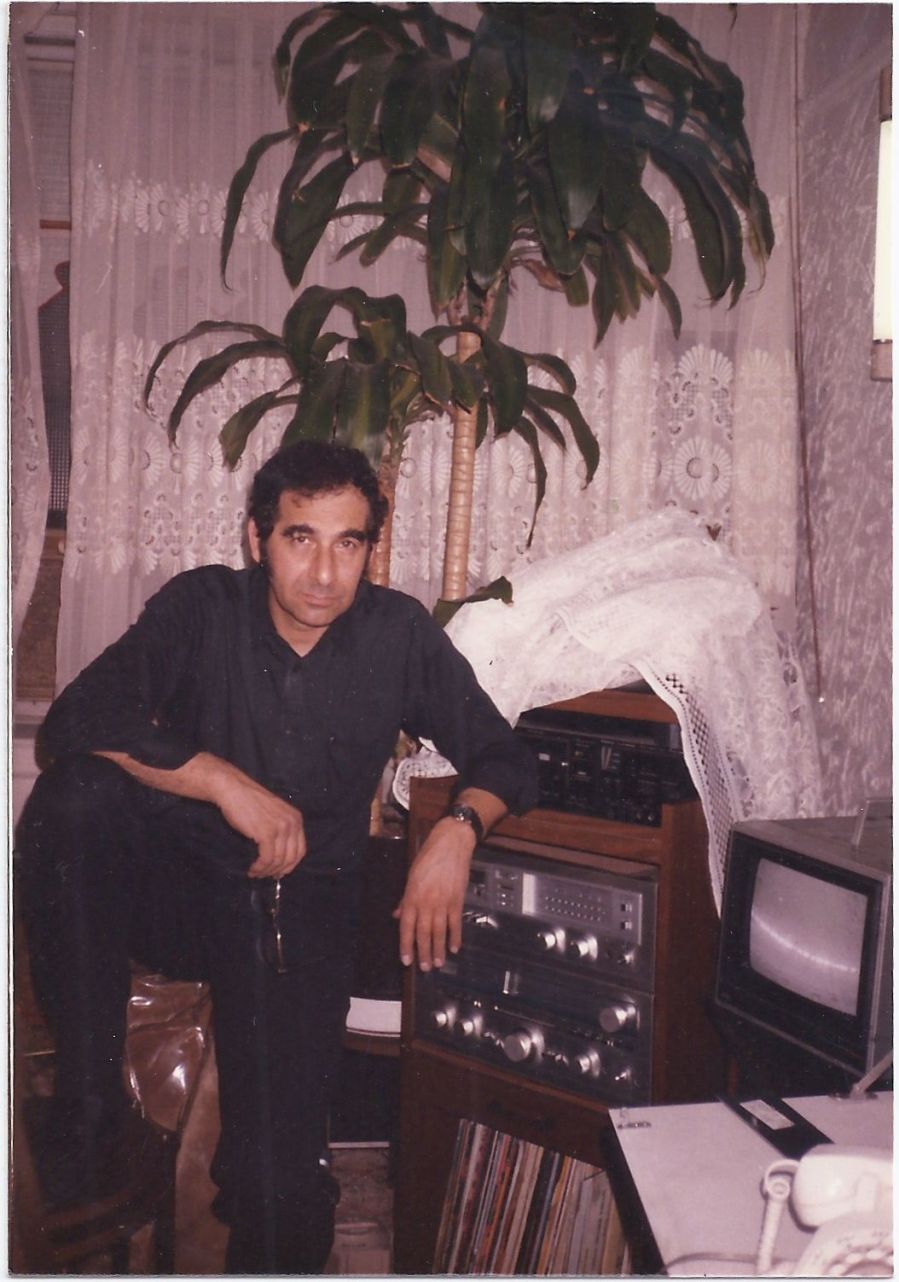
Tonight is the second yahrzeit of my father Mr. Manny Meyer. Dad z’l was an active member, and an avid fan of, the Breuers Choir. He made it his business to record their regular performances such as their concerts and appearances at the Yeshivah dinner. He also recorded many of the choir practices and would listen to his recordings while driving in the car or working on his photography equipment at home. 

Sometimes after a choir concert, people would ask him for a copy of the tape. So I know he wasn’t the only one who had this type of attachment to our music and our unique way of performing it. 

When his voice was no longer fit for the choir, the members made him a farewell breakfast. At the end of the breakfast, he was gifted a beautiful Kiddush cup purchased at Michael Strauss Silversmiths. He then requested, like some final request, that the choir sing the Shir Hamalos Psalm 128 which is known to be sung at the Shabbos table of many German Jews. Of course, he had a tape recorder with him and he wanted that familiar tune to be recorded with the voice of the shul choir. 

 Many years earlier there was a breakfast upon the retirement of the choir leader Mr. Nathan Weiss ZL. At that breakfast, the choir performed along with both chazanim and concluded by singing “Shir Hamalos” to the tune of Chazen Frankel’s “Kel Adon”, a tune he brought from Hamburg. I have that recording somewhere though I couldn’t find it in time for the launching of the website. 

I don’t know if my father ever had a plan for the scores of tapes that he had stored in boxes. But it is time for them to be shared.  

Tonight, with G-d’s help, I launch this website where people can finally hear what sat in boxes for several decades. Of course, they didn’t literally sit in boxes, because I had listened to much of this growing up and gained a certain familiarity with it. In fact, the musical tradition is one of the most important things my father gave me. When you share with someone some art or the beauty in nature and when you connect with someone over song and religious expression, you have given them something that no one can take away from them. I don’t know if in heaven a website is considered a good thing, but I know that in his life my father would have been thrilled that his music, in the company of other collected music, would be given a space in the public forum. 

Yehi Zichro Baruch 

Dad’s Sensitivities

“His first thought was to cross the street-a natural reaction, one that had been reinforced by years of beatings and taunts. He was walking alone on Manhattan’s West 185th Street, from Amsterdam Avenue toward the ice cream parlor he had discovered on Broadway, when he spotted the group of boys-strangers, not Jewish -approaching. In Fürth, such an encounter was sure to produce, at the very least, some small humiliation. He started to step off the sidewalk. Then he remembered where he was.” 

From Walter Isaacson’s, Kissinger: A Biography. Isaacson writes that many years later Kissinger recounted in a speech: “When I came here in 1938, I was asked to write an essay at George Washington High School about what it meant to be an American. I wrote that… I thought that this was a country where one could walk across the street with one’s head erect.” 

As German Jews, we have a reputation for paying special attention to kiddush Hashem. This also includes a special sensitivity- almost a fear of, “Ma Yomru HaGoyim?”  

Is it our strength or our weakness? I sometimes am of two minds on this. Whatever it is, we all have it. 

But this sensitivity comes out in different ways from different people. 

My father z’l, who grew up in Switzerland, had different ideas than I had as an American-born Jew. 

For instance, he did not like me wearing a yarmulka in the street, but didn’t mind when I wore a black hat in the street! As an American Jew, I have no qualms with walking in a Yarmulka. But in situations where I feel uneasy, I prefer a baseball cap (silly as it looks with a beard and white shirt…) 

My father and I were equally uncomfortable seeing Taleisim worn openly in the street, but Dad also resented the carrying of a tallis bag in the open! He always asked me to put it inside a plastic shopping bag! 

If Dad had to daven Minchah while on the road, there was always some way to conceal it. Usually, he would open the trunk of his car and pretend he was looking for something. I never felt self-conscious about this, mostly because the Moslems have broken the public-prayer taboo for us. 

Here is another generational difference between us. Dad z’l, and many of his generation- including non-Yekkes- would not wear a hat to shul with a Yarmulka beneath it. When wearing a hat, the Yarmulka was always in the pocket. On Shabbos he left the Yarmulka home, so the first thing we needed to do when returning from shul on Friday night was to finger through his night table in the dark for a Yarmulka.  

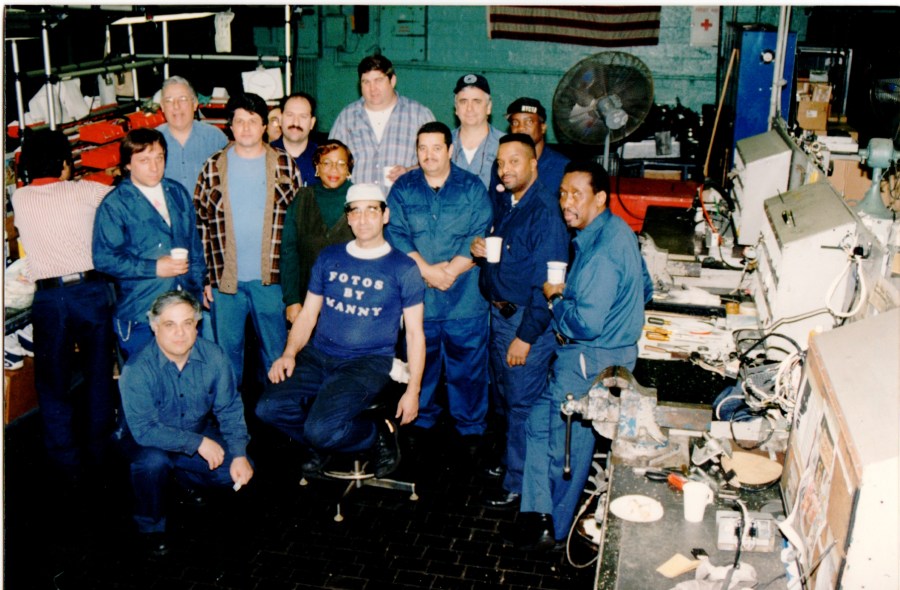
But here is where Dad was a Jewish warrior. My father was one of the best examples of a religious Jew in the blue-collar workforce I have come across. The bus depot was not an accounting office or a municipal building. It was a garage. His co-workers came from every nationality but were predominantly Black, Irish, and Italian. Although they never saw him in a Yarmulka, they all knew he was an orthodox Jew. From time to time they would ask him the reason for something we do and he had the most practical and logical reasons- (be they the real reasons or not.) Knowing how he loved to talk, his answers were probably long enough to discourage this type of questioning from reoccurring.  

But as great of an advocate as he could be, he wasn’t comfortable “fighting” for his religion. He liked to let things pass. So, for years my mother was angry that the Swiss-American society- whose events he loved to attend, would make every meeting and outing on a Saturday. And she would push him to complain about this. He wouldn’t. 

He also would not complain that in his 30 years at the Auxilary Police, he was always given promotions when, and only when, there was no one else to promote. Mom called it anti-Semitism and Dad called it a coincidence. These were the attitudes driven into the Jewish psyche during the thousand-year  Rhineland Golus. 

Then came my sister’s nursing “boards” (exam). It was given on a Shabbos. The State agreed to accommodate Sabbath observers by sequestering them over the weekend in a hotel room in order to take the exam on Sunday. My mother called one of the major Jewish organizations and they would not do anything to lobby for the Frum students. (Ma yomru HaGoyim?) Then my mother called Senator Daniel Patrick Moynahan’s office. The good senator was appalled and made several phone calls. The result was that the exam date was moved, and the calendar was permanently altered so it could not be given on Sabbath again. There are times that the Jew must walk with his head erect! 

Divrei Zikaron for a Cousin

Last week I was asked to give words of remembrance for my late cousin, Naftali Hirsch z’l.  

Naftali was the son of the late Rev. A. Asher Hirsch who had a small, but active, shul in the Bronx. Uncle Asher would not take the title of Rabbi, since he did not have the opportunity to qualify as that. He was very principled about this and about everything he did. 

Naftali carried this devotion to public service forward in his own way. When he moved to the Heights in the early 80s, he quickly adopted shul responsibilities and began to lock the shul after services on Friday nights. When Rav Gelley came a few years later, Naftali became someone the Rav could look to for small favors and assistance. Finally, Naftali was a star member of the shul choir with a strong, high-pitched voice that carried the whole show. 

I pointed out that the previous Parshah, Naso, teaches the three jobs of the Levite. He carries the burden of the Mishakn “on his shoulder”. He “carries” the temple services in song. Finally, we learn that after he is too old for these services, he can still serve as a “gatekeeper” in the temple- locking and opening its gates daily. 

These were the exact functions that Naftali found for himself in the community. (Aside from many quiet chasodim he performed and his great ability to laugh at a good joke.) Naftali became a surrogate Levite. 

The next morning while waiting at a red light I suddenly remembered that at the end of his final illness a name was added to Naftali. It was “Levi”. Levi Naftali was his ultimate name. It ironically fit him in a name that no one thought of at the time. 

Yehi Zichro Baruch. 

The Rabbonim in Dad’s Photography (part 1)

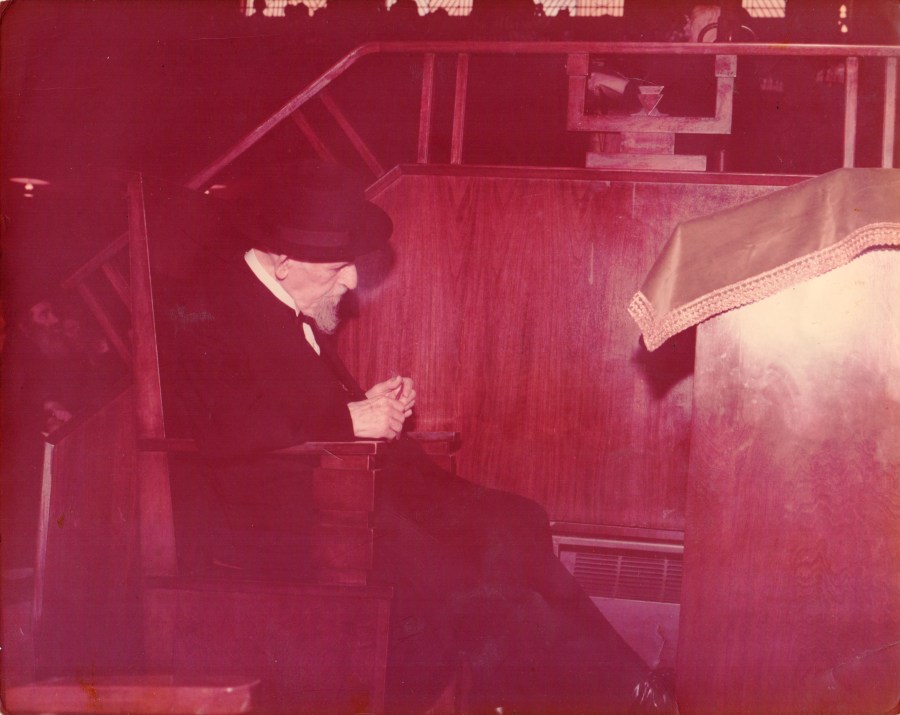
Among my father z’l ‘s photography is his photo of Rav Breuer zt’l sitting at his place in shul perhaps listening to a speaker or waiting for services to begin. This photo was chosen by the Breuer family to grace the introduction to the book series, “A Time to Build’. Dad mentions this photo in an interview HERE. 

Following the success of that photo, he later shot Rav Schwab zt’l in that same seat, and eventually Rav Gelley zt’l.  

The same seat, the same cushions, the same cover of the podium. Only the person occupying the place had changed in the course of 70 years.  

The Rov faces the front in a chair with a high back and unbending parts. The chair is affixed in its place, as much as the position of the one who occupies it has been affixed to its place in history. Three small lights illuminate his podium with the words “Thy Word Is a Lamp Unto My Feet and Light Unto My Path” in wood letters on the wall.

This is the front of the shul. A sacred historic place The Mizrach! It carries an importance associated with Rabbis and community leaders; responsibility and prominence. Dark tiles polished to a bright finish,  red carpets and dark wood.   

With Rav Schwab, a handle is added for the Rav to lift himself from his place. With Rav Gelley, a small bookcase. A strong exception to the dearth of seforim in the shul proper.

(The dearth of Seforim is not an accident, because following the old model of a shul- still used by Young Isreal type shuls that have retained the pews, the structure is not made for study-hall styled learning, nor is food ever served in the shul (other than kiddush, havdalah, and figs to accompany kiddush on the second eve of Rosh Hashanah.) For this reason, there is no Mezuzah on the shul -because its function is never compromised. ) 

The Rav’s seat to the right of the Aron has access to a private restroom. The one to the left doesn’t. (There is an old anecdote about that- which some in the family might confirm or deny.) But the presence of two rabbinic places raises the question of who was meant to sit there in 1952 when the Shul had only one Rav?  

P.S. Please contact me for above or other versions of this picture.

A grandchild of the rav AG has supplemented some important and fascinating info to the above:

 The posuk on the wall in front of the Rav’s seat is “נר לרגלי דבריך ואור לנתיבתי “. This was placed there in 1962 in honor of Rav Breuer’s 80th birthday. This same posuk is inscribed in the Ner Tomid in memory of the rav which hangs to the right of the Oron Hakodesh.

Regarding the second seat in front. This seat was originally occupied by the Gabbai on duty every Shabbos and Yom Tov as was done in the IRG in Frankfurt. When Rav Schwab came in 1958 it was naturally given to him. This is also why there was only room and bathroom built and located near the “official” rav’s seat.

 If we’re getting technical, each Rav brought his own pillow for his seat. Surprisingly the Shul never supplied one. I know this as I purchased the last one that Rav Breuer used and now have it in my home (I don’t use it!). When Rav Mantel came there was no pillow on his seat as Rav Gelley took his with him when he moved over. I actually purchased the pillow for him at the time.