Our Sukka’le

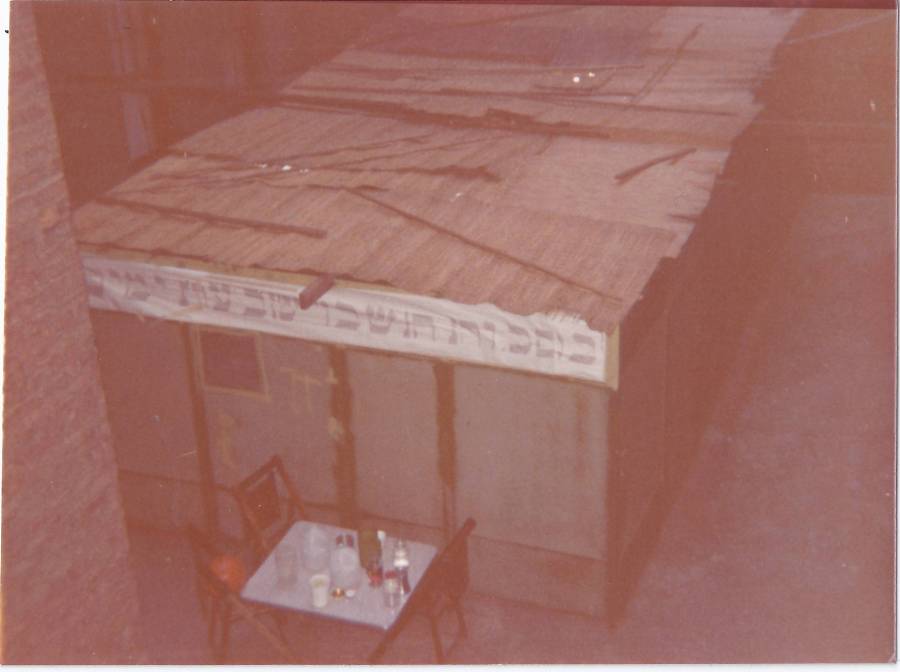
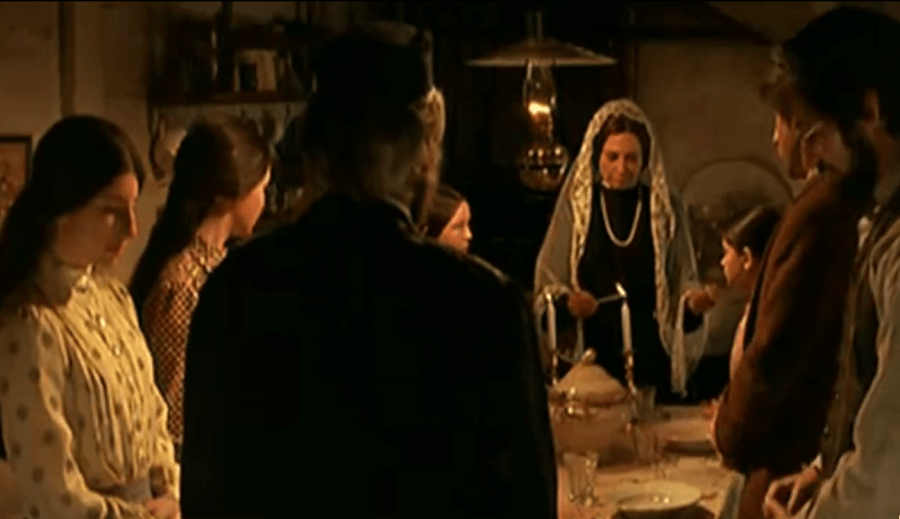
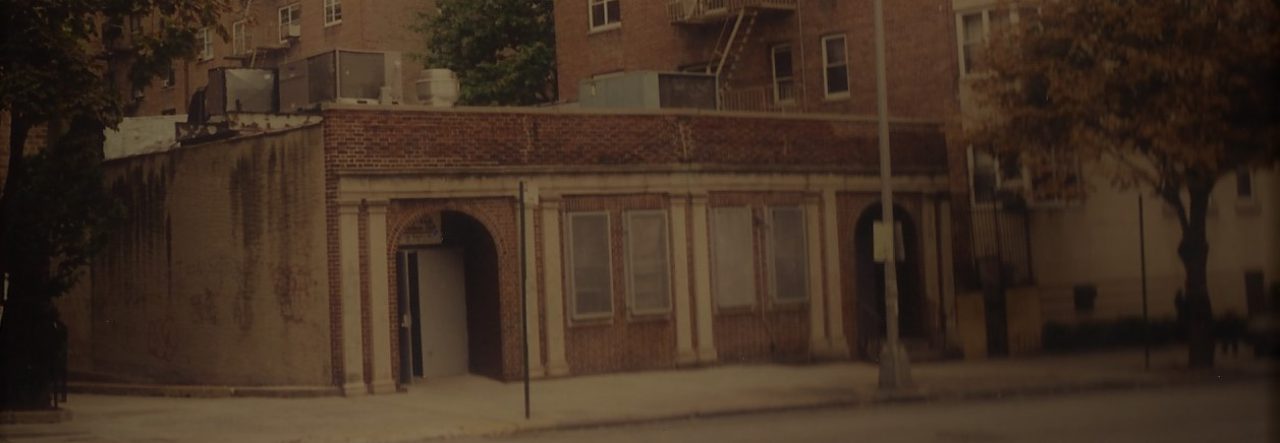
The sukka at 615 West 186th Street was made of green aluminum walls that hooked into each other. It was originally a hut used as an office at construction sites (before trailers were invented?). 

My father was most instrumental in retrofitting it to a sukkah. 

He created a pully attached to its door to ensure it remained closed. He also steadied the sukkah by having the main Schach beams reach the walls of the building’s rear courtyards. 

Mr. Adler owned a vinyl shower curtain and barbershop apron factory on Ft. George Hill. He would provide the sukkah with plastic tablecloths and window shades. 

About a month before Sukkos, a “Sukkah meeting” was called in the apartment of one of the Frum residents. A date for erecting the Sukkah was chosen, and jobs were assigned. The last such meeting, and perhaps the only one I was old enough to attend, was in Benny E.’s apartment in the early 90s. 

The young folk- (which included my father and Benny, as well as Mr. Zitter and several YU-affiliated families who passed through the building over the years) would assemble on a chosen Sunday morning to carry the Sukkah out of the building boiler room to the rear courtyard. The older neighbors (like Mr. Fulda-who had a watch repair shop on St. Nicholas Avenue, and Mr. Martin Lehmann, who worked for a butcher on the Upper West Side), would be given lighter jobs like bringing up the chairs and washing the walls with a garden hose. 

The Sukkah could hold eight families at once and, in the building’s Jewish heyday, had two ½ shifts. The families who ate quickly and came home from Shul early were in the first shift. My father greatly disapproved of how these people ate their meals so quickly. As I remember, the Third shift had only one or two families—ourselves and the Zitters.  

Shortly before Yomtov, the building youth would arrange to hang decorations, some from years past, and new homemade items such as paper chains and illustrations each year. 

Entry to the Sukkah was via an alleyway or via a window in the building’s lobby, but the window required a short climb over a ten-foot drop. 

The Sukkah was put out of use as the families in the building slowly moved out. My brother used part of it as his own for several years. Today, two small Schach rolls remain on my Sukkah as I write this. 

Some Sukkah memories I have: 

My mother knew Mr. Adler could not stand the smell of fried fish. To irk him a little, she would always serve this on one day of Sukkos. 

My father’s birthday was at this time of the year. Some ladies in the building would grace the occasion by making him his favorite dessert: A German-style Linzer Torte. My father would rave about how intricate the process of baking this cake is and how many fine ingredients it contains. Because he cherished it so much, and it was so rich, we could all only have a slither of the cake, then it was committed to the freezer where it would wait to be eaten one slither at a time over several months. 

For someone reading this who has never lived or eaten in a shared Sukkah, it is an experience of community and bonding. Of course, for us, it was the only way we knew. 

When the Apple Said It All…

On a discussion board this week with Yekkes in Eretz, a post mentioned the fact that many of our parents used nothing other than an apple dipped in honey for the “simanim” on Rosh Hashanah eve. Today, many of us have a variety of fruit and vegetable on the table and a placard from an institutional mailing, to help us through the various prayers. 

What changed? 

Mostly our awareness. Today, a person has access to many publications in the English language. People know the Halachos from several sources. People have more contact with other people and their Minhagim. Our approach to Mitzvah performance seeks to cover all the bases. Scarcity is more scarce. And all of the above. 

But what I posted to this message board was that the Minhag—mentioned first in the Gemara—had been mostly forgotten by the masses until the appearance of the placards. The apple and honey were sufficient, and it was a special moment in the year—a savored moment—done with a simplicity that is not always found anymore. 

Now, there was once a writer of Jewish sociological books, who wrote in an article (1990s) abot how he remembers a simpler time that people would buy candy bars based upon just reading the ingredients. The Jewish Observer roasted him for that line, since it is like longing for ignorance and folly. 

But I know what he missed; perhaps he didn’t quite know how to express it. 

He missed the innocence (or perceived innocence) of his childhood.  

I recently saw an internet meme. It showed an old Blockbuster Video (rental store). The sign in front said: “It is not me, you miss. It is your childhood!” 

All that said, the discussion went to which Siman to use first, which is a complicated sheilo in Halachos of Brachos. Many said that even with all the variety at the table, including fruits of Israel, the apple still goes first since it has precedence as “Chaviv”. The beloved fruit. 

I smiled when I saw this. Seems I am not the only one missing my childhood. 

The Shul of the Future and the Anti-Minhag 

Hello. Today, I am writing about Minhagim again. About the utopian Jewish dream of ending all minhagim. 

Of course, this would refer to Yemos Hamoshiach. In Messianic times when the diaspora is gathered, there will need to be a merging of minhagim or a completely new order of Minhag for the united Am Yisroel. 

The community of religious Zionists considers the establishment of the State of Israel to be a manifestation of the beginning of Messianic times. Thus, in the early years of the state, they embarked on making a uniting Nusach called “Nusach Achid,” initially attempting to make it the official siddur of the IDF. 

To make a long story short…it never really caught on in Israel.  

Despite the Olim’s philosophy lending itself to the idea of leaving the ways of the Diaspora behind, they nevertheless still had an affinity for the Nusach they brought with them. 

S.Y. Agnon has a short episode in one of his lengthy books, which I enjoy recounting. It involves a pious man, a widower or a bachelor, who is introduced to a local widow in the Shtetl,  and they decide to get married. The widow had already made plans to move to Jerusalem (as it was once a tradition for widows to live out their days in Jerusalem.) Having met this man, she would marry him, and they would go to Jerusalem together. Suddenly, a few nights before the marriage, he had a dream in which “Yom Tov Sheni” appeared to him as a woman – dressed in black and crying over the fact that he would no longer be observing the Yom Tov Sheni. He was so alarmed by the dream that he called off the wedding. 

Of course, Agnon was poking fun at the Lilliputians and of the Shtetl life, but sometimes we, too, need to remember to keep our eye on the big picture. 

Well, this week, while davening Mincha in the Five Towns, I encountered a piece of the future. A “Minyan Factory”—or so I was told—has opened on Central Avenue. 

I considered this a great convenience since other times I have ventured through that great avenue of Frum-commerce and Gastric sensations, I needed to find Mincha by searching in town for local Shuls and their schedules. Now, the Minyan would be “Central”. 

Well, as I learned more about this “factory” I heard that it was started with the assistance of the Scheiner Shul of Monsey. Knowing this I understood that it would be the type of place that makes everyone feel welcome, embraced, and at home. 

Indeed, there was a very welcoming coffee station, with soda, slushies, cake, pizza in a warmer, and hot dogs on rollers under a heating lamp! 

Additionally, there were signs about regular shiurim and a most novel invention- that brings me back to the dreams of the early Zionists and their Nusach Achid:  

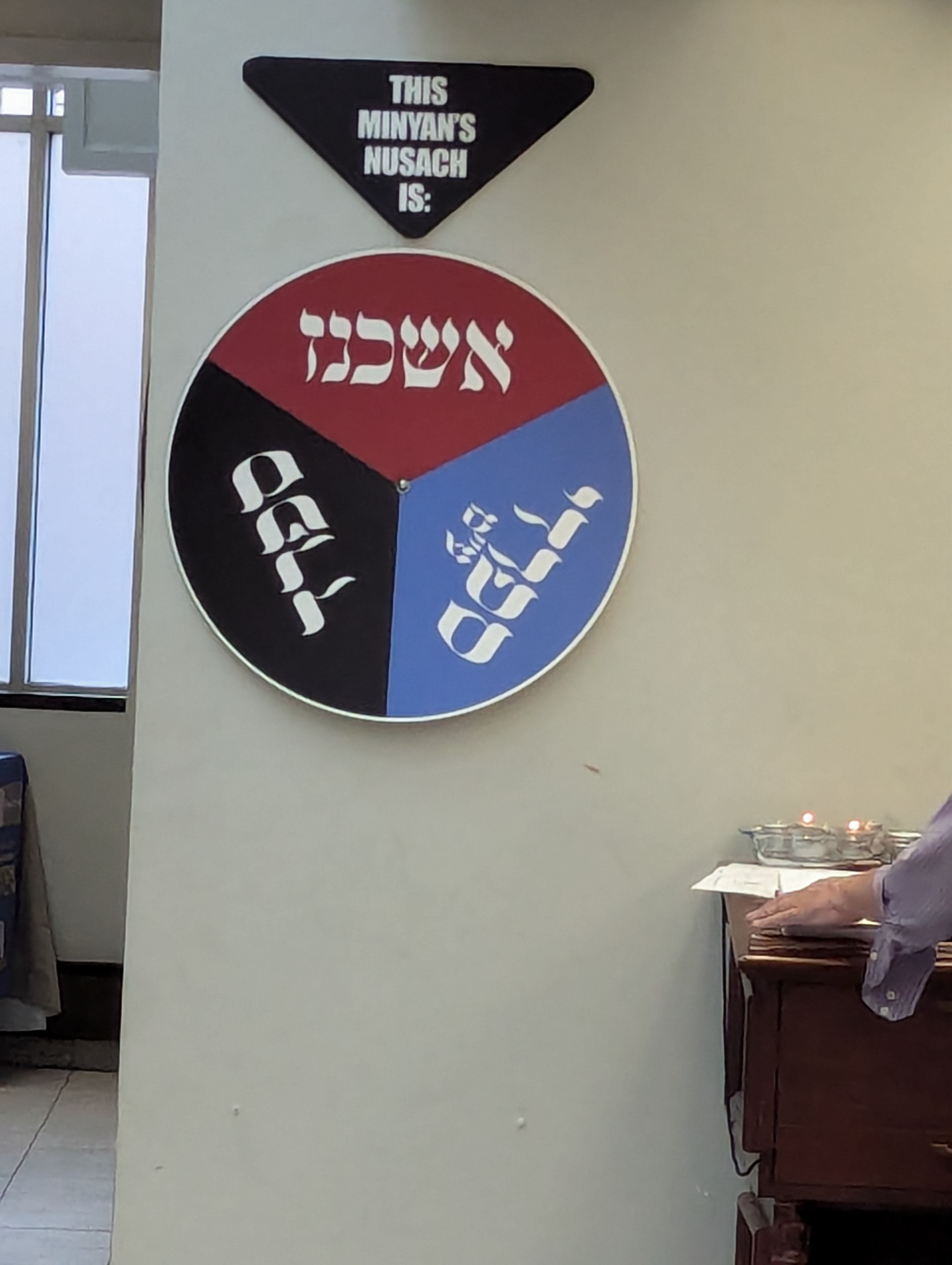
There was a large dial on the wall before the Chazan’s Amud. It could be turned to indicate if the current Minyan was Ashkenaz, Sefard, or Sefardi. And what, you might ask, determines the Nusach of the Minyan? Nothing other than the volunteer Chazan of that Minyan!

 The great Nusach Dial of the future!

Now, why would I, a guy with a Yekkishe blog that often glorifies Minhagim, be touting something like this? 

As I begin to age, I start to look for ways that Moshiach could come amid all the craziness around us. I realize that while the Zionists initially hoped that the ingathering of the Exiles would produce a NEW Nusach, I can see in hindsight that the solution to finding a Nusach for our nation’s reunion after a two-millennia-long separation would be the inclusion of ALL Nuschaos, with a fluidity that would allow all Minhagim to find their home in Moshiach’s time.  

Perhaps, this week, I witnessed the prototype of the Shul of the Future. 

Shabbos Kestenbaum as a Hirschian

The world of Jewish political enthusiasts was energized by the appearance of a fresh-faced young man, an online influencer, and an outspoken advocate and party to a lawsuit against

the recent wave of anti-Semitism that has terrorized Jewish students at some of America’s finest and oldest universities. Shabbos (Shabsi) Alexander Kestenbaum, a recent graduate of Harvard’s Graduate School of Divinity, has spoken before Congress, and now at the RNC, about his experiences and the way that both the Democratic party and his university have abandoned a commitment to liberal arts, tolerance, and the safety of Jewish students. 

Shabbos received a top-notch education at Modern Orthodox day schools and rounded off his early schooling with a year at Aish Hatorah in Jerusalem.

Today, he sports a large velvet Yarmulka and an unapologetic pride in his Judaism and…his ancestry. You see, Shabbos is a great-grandson of Rav Breuer’s daughter Hanna Schwalbe. 

In his advocacy, he has energized the students to stand up to the agitators. In his speech, he declared that “Jewish values are American values, and American values are Jewish values!” This might raise eyebrows but is probably just a nod to the founders’ deep religious convictions and to the idea that the Bnei Yisrael—via our Torah—is meant to be an “Ohr LaGoyim” – a light unto the nations.

But what does the second clause mean?  “American values are Jewish values” does not sound like a theologically sound idea (though it makes for a great speech ender!)

In truth, we find a similar thought in Rav Hirsch’s writings, and Shabbos might be echoing his ancestry—whether he knew it or not. Here is a quote from Rabbi Meir Hildesheimer’s article on Rav Hirsch on Professor L Levine’s website.

Rabbi Hirsch was especially influenced by Hegel and Schiller. In a speech given in his school he founded on the centenary of the birth of the latter, he claimed that the universal principles of Western culture embodied in Schiller’s writings are Jewish values originating in the Torah

Now, as shocking as this sounds, Rav Hirsch, and arguably TIDE, are meant for us to see where Hashem’s glory is expressed in the greater human experience. And to Shun anywhere that it doesn’t. Indeed, Rabbi Hildesheimer goes on to show that Rav Hirsch’s experience with Western Culture ended where the Torah’s ethical code was absent:

Despite Rabbi Hirsch’s liberalism in matters of culture and education, he was critical of literature that he considered offensive from a religious or moral standpoint. Thus, while reading “Der Salon” by Heine, he grew so highly incensed by its blasphemous expressions that he wanted to burn the book and compensate the library for its destruction. Nevertheless, the fact that “Der Salon” was written by an apostate did not prevent Rabbi Hirsch from reading it. 

Furthermore, we see the strict adherence to Torah values in the encounter with culture elsewhere in Rav Hirsch’s writings. In an angry article addressed to the reformers in Frankfurt who labeled themselves as “Religion allied with progress,” Rav Hirsch takes great exception to 1) what the reformers called “progress”, and 2) the idea that his community is somehow “reactionary.” But before doing so, he makes the following statement in fiery language:

We hereby declare before heaven and earth that if our religion indeed would require us to denounce that which men call civilization and culture, we would be ready to do so without hesitation, precisely because we truly regard our religion as a religion, because it is to us the word of G-d, to which all other considerations must defer.

I intend to write a second installment on Shabbos Kestenbaum’s appearance at the convention, but I want to close with a short qualifier to the words of Rav Hirsch – and his young descendant- above.

Rav Schwab- in at least two of his speeches/articles among his collected works, makes the assertion that some of the affection the community in Germany had for the works of Schiller and the like would not have been so great had they known that men who could quote the poetry, philosophy, and music of the great German thinkers, could send one million children to the gas chambers. He even mentions Rav Hirsch’s name in this context. Although I assume Rav Hirsch, in his saintly ways, never had affection for the writers, only for their wisdom- Rav Schwab avers that Rav Hirsch zt’l, from his place in Gan Eden, would agree to his conclusion that the morality of Schiller did not stand the test of time. Indeed, he qutes Rav Hirsch’s commentary, wherein Avraham is chosen specifically because he can be relied on to maintain the divine morals. (Selected Writings pg. 81)

This said, we, who live with the Holocaust as a backdrop to all we experience today, need to be careful when heaping praise on the values of American society…as espoused by whichever party should be in power.

Mourning Jerusalem and a Long-Lost Friendship

As we sit in the Nine Days, we think of our place in Golus and the events we have faced as a people in the cycle of history.

Our place as a people has alarmingly become front-and-center in the media. People are talking about anti-Semitism while watching it in play with the approval of the biggest universities, municipalities, and elected representatives. People too young to know that certain verbiage, imagery, and opinions are, actually, ancient tropes and accusations- redesigned to fit a narrative meant to bolster the most sinister nations that hate both Israel and the Jewish people.

And the rest of us are sitting here watching all of this unfold.

 Politicians who made a career out of supporting Israel, marching in the parade, and shaking hands in Jewish neighborhoods now deliver condescending remarks critical of Israel that seem to have been handed to them by the White House.

All of this, we as Jews believe, is because the Jewish people are becoming distant from our Torah, our best selves, and our homeland.

In one of the first videos that I posted on the history of our Shuls, I spoke about the life of Rabbi Hanover z’l- and how he fled Germany as the last Rav of Wurzburg. He sent his youngest daughter, Ruth, to Holland as he and his wife fled to America. Sending for her later, he could not obtain a Visa. His older daughter went to Israel with his stepchildren, Rabbi and Mrs. Hanover were in America, and Ruth never made it out of Holland.

Yehudah Amichai was an Israeli poet. Perhaps Israel’s most famous poet. He was raised Orthodox but became a voice for a religiously skeptical Zionism. Still, among his poems are Jewish thoughts and struggles.

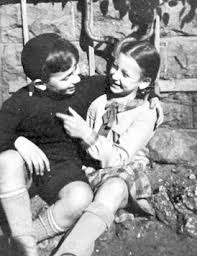
Yehudah was also Ruth Hanover’s childhood friend in Wurzburg when he was known as Ludwig Pfeuffer.

Amichai would write about Ruth at the end of his life, and it was through her that he viewed the Holocaust. According to his girlfriend from his college years, “Amichai had an argument with a childhood friend, Ruth Hanover, which led to her cycling home angrily. Ruth was caught in a traffic accident, as a result of which she had to have a leg amputated and felt guilt and responsibility. Ruth later was murdered in the Holocaust. Amichai referred to her in his poems as “Little Ruth“. (from Wikipedia)

It is possible that her childhood disability complicated her Visa process and led to her being trapped in Europe.

As Amichai carried the picture of Ruth in his heart, Rabbi and Mrs. Hanover carried the guilt of separation with them as they came to these shores until word came that she was deported in 1943 and eventually perished in Sobibor.

With the memory of his daughter and his community in his heart, Rabbi Hanover set out to lead the Shaarei Hatikvah community in Washington Heights.

Analogous to the heavy memories these refugees carried with them, Rabbi Hanover brought something else with him. He brought a stone from the destroyed Shul in Wurtzburg, which he was to embed in the new structure on 179th Street.

It is now some 80 years since that stone was embedded on these shores and that structure is now up for sale. I hope someone will salvage that stone one more time and deliver it to the city of Jerusalem one day soon.

(Much of the content from Yad Vashem)

A Blessing Upon Your Head. Part 2

From the Google group of Avraham Aumann (Google translate from Hebrew with corrections):

“I received the following story from a friend of Ben Ashkenaz,

Maybe it can strengthen us in the beautiful custom of blessing the children.”

My father, Shlit” a, taught for many years in Neve Yerushalayim in the Har Nof neighborhood in Jerusalem.

English-speaking girls who knew nothing about their Jewish heritage received lessons in Judaism, faith, and knowledge of the mitzvot at “Neveh.”

But much more important than the lessons they received were the life lessons learned when they saw the conduct of Torah and mitzvot observant homes.

My parents would invite girls to almost every Shabbat meal to taste the taste of Shabbat.

The special Siyata Dashmia that accompanies those engaged in repentance is very miraculous.

The Almighty brings them success in various forms they have not even dreamed of.

One day, one of the women – a Baalas Teshuvah, told my mother (HKM) that at the very beginning of the road, when there were still many debates about whether to take this bold step,

she was invited to a Shabbat meal with a few other friends.

Of course, everything was so new and intriguing that they followed everything closely and with pleasure, even to things we don’t usually notice.

“When I saw all the children approach in order, first to the father and then to the mother, and bow their heads to receive the blessing of the sons, I was moved.

The scene really touched my heart, and I decided that I wanted such a family!

This was my main drive to repent and build a Torah house.”

A Jew for All Seasons

“A Jew for All Seasons” was the name of a play put on by the ladies Achdus group of our community in the 1980s. If someone is interested in seeing it (women only, please) please contact me.

But today I am talking about the Sefira. 

The Minhag not to shave, cut hair, or listen to music in the Sefira is observed as a remembrance of the loss of the 24,000 students of Rabi Akiva in the third century. As such, it is a form of mourning (see an earlier blog post about this point here). 

It has become almost ubiquitous in America to observe the “first” Sefirah. In Israel it is already the de facto Minhag, and they refrain from weddings after Lag Ba’Omer as well- until Chodesh Sivan. But one of my students was surprised that the Rema’s Sefirah Minhag (Rosh Chodesh Iyar until early Sivan) is not given precedence by Ashkenazi Americans over the Beis Yoseif’s.

I am aware that some people who are in the workplace among non-Jews need the first Minhag so that they can grow a beard over the Pesach vacation and return to work with a beard as opposed to stubble. Others might have chosen the first Minhag since Pesach already precludes shaving and allows music, and this removes a whole week of Sefirah and ends it earlier. Oka-a-a-y.  

But I want to point out that the idea of waiting for Sefirah until a time that the festivities of Pesach have fully passed makes a lot of sense and avoids the seeming contradiction. (Although the Rema’s minhag does have Sefirah observance on Rosh Chodesh…so there is some overlap of Aveilus and Simcha in this Minhag as well.) Interestingly, the Ezras Torah calendar calls for Av Horachamim to be said this past Shabbos, despite the no-Tachanun rule of Nissan and the Mevorchim Hachodesh of Iyar because “it is Sefirah”. 

Therefore, there is a good argument for American Ashkenazi Jews to cling to the Rema’s Minhag. (Elsewhere I have discussed our local Minhag.)

Our Halachos are meant to “dictate” our behavior-  and also guide our emotions and thoughts. Sefira calls for refraining from song and haircuts and therefore should remind us that this was once a time of great sadness. While listening to acapella Jewish music seems to have become popular, wouldn’t it be appropriate to “swallow the pill” and engage in the relevant mood?

Another “breach” in the minhag has become increasingly popular with events to mark Lag Ba’omer on the night of the 33rd, where Halachah would dictate that we wait until the morning of Lag before relaxing the Halachos of Sefira. I opened the popular “Dirshu” Mishnah Berurah and found that they had no support for this, other than that the respect for Rabi Shimon Bar Yochai is considered a Mitzvah. One cannot draw support from the festivities at Meron because many of the adherents of Chasidus are keeping the entire 49 days as mourning, they therefore are not relying on the partial day of Lag Be’Omer. Of course, if one follows a Rov with Kabalistic or Chassidic leanings this is fine. It is for us to remember (I wrote about this last year here.)that we have to follow our Poskim just the same. (One could wonder if an adherent to the local KAJ Minhag would need to wait until Lag Be’Omer morning – meaning, is it part of the 33 days?)

Regarding a Third-Wave Revival of Aschkenaz

This post is long in the making like most things I plan to do – that quickly become victims of procrastination. Things just hit a peak so I am sitting down to write this at a school b-ball game. 

A renewed interest in Minhag Aschkenaz is emerging in the broader Jewish communities and Yekkes outside WH. It is manifested in various forms such as, in new minyanim in Lakewood and Passaic, a Kolel in Eretz with a very robust webpage (see icon above) and a thirst for research, three WhatsApp groups, a Google email by Professor Auman’s son in Israel, and several Facebook pages. I am not even mentioning my websites and social media among this, since I have very little minhag content on my site containing research or documentation. 

The minyan in Lakewood already has a periodical, as does the Kollel in Israel. The Whatsapp groups feature regular posts of Minhag-related shiurim from the Monk’s Shul in London and by the Israel Kollel. 

The Whatsapp group was begun by a Zurich IRG member living in England. While the content on that group is posted by admins only ( I am one, but rarely post), he has since opened a second group as an open forum. The chatter is constant and the group is slowly making its way through all the old topics – and some new ones. Some of it is minutiae and some of it is quite informative.

For many of us who carry the guilt of leaving the Heights upon our shoulders or the collective worry for its future, the question arises: Where does it all lead?

The main contribution among all of the chatter- in my opinion- is exposure to several communities abroad and the chance to learn a bit about them.

Is all the Minhag chatter minutia? I am not the one to say. I know that in every other community in Judaism today, there is an increased focus on Halacha and a mixing of cultures. People are even keeping other people’s Minahgim and Segulahs in our age of social media. Women in Teaneck are baking Challahs in the shape of a key, and people in Flatbush are flying to Uman. Should we not have a seat at the table?

There is rumbling this week about the possibility of opening an Aschkenaz minyan in Flatbush. So for all it is or isn’t, third-wave Aschkenaz is coming to a neighborhood near you!

Chanukah, Roedelheim, Tzitzis and More 

Chanukah has just passed. It passed slowly for me as I suffered most of it, and still do, from a bad cold.  

I make it my business each year to 1) use the Roedelheim for the Hadlakah 2) Try to go through some of the histories of the events of Chanukah 3) To incorporate different things into each night’s lighting (tunes, gifts, or a visit to someone, or a dreidel game.) 

This year, at the Seforim store I saw a packet of cards that had in Yiddish the claim to be “Authentic Chanukah Kvittelach”. This raised the curiosity of a guy like me. I especially wanted to know what the Jewish card game is. The deck was also manufactured in Vienna, by a Jewish company. So there is more old-world charm there. 

Well, I opened the deck and sent an email for the instructions. The deck has old-world charm, to be sure. But it is basically numbered cards from one to twelve, with no face cards (Queen, King, etc.) The rules are basically identical to Blackjack! (Maybe fully identical, I don’t remember all the small rules.) 

So…was I a fool? Maybe not. The Rupshitz’er Rebbe wrote great warnings to his Chasidim against their customary Chanukah card games. Besides the time and money lost at that table, he argues- (perhaps to appeal to a certain element of his adherents?)- that it is well known that the cards contain “names of Gd that are invoked in an unholy vein” and that exposure to this is injurious to one’s soul. 

I am not aware of what was written on playing cards of his era, or were these tarot cards perhaps? Or, does he mean the original King, Queen, Jack and Ace ? Do they have meaning in the dark side? In any case, with these cards (retailing at 17$ !) I can feel free of any satanic influences. 

When using the Roedelheim for Hadlakah you have the Nusach used in KAJ “Lehadlik Ner Shelachanukah” – with the two words combined into one word. This gives the numeric count of which followers of Arizal aim for (13). And, it is a point of grammar, according to Seligman Baer, it indicates the fact that this candle is reserved for the Mitzvah alone and is not for personal use like the Shabbos candles.  

Further, you have the Haneiros Halalu as per the Abuderham.  

This year on one night I used a Roedelheim that is special to me. It was printed in 1938 in Germany, although the address of I. Kaufmann printers in New York is already present on the back of the title page. It was the last of its kind and came from a foreboding moment in history. It also indicates that it was purchased from a seforim store in Berlin.  

Finally, I want to mention the words of the Sheltos, who writes that the Menorah is on the right, the Mezuzah on the left, and the “Ba’al Habayis” with a garment of Tzitzis in the middle! This year for the merit of a soldier in Israel I began to wear my Tzitzis out of my belt again. The history: 

Of course, I was not raised with this habit. It was not done by German Jews, and likely because there was a (legitimate) fear of arousing “rishis”. Rav Schwab zt’l was known to say that he “never saw his rebbe’s tzitzis.” Did he mean Rav Breuer zt’l? I think he meant Rav Yeruchom zt’l in the Mir. 

Years later as I went to large Yeshivahs I began wearing them out, maybe to “fit in”, or maybe because of the words of the Mishnah Berurah. I don’t remember.  

Then after several years in the Lakewood Yeshivah, I suddenly realized that the bochurim from the Mir Yeshivah on Ocean Parkway – whose grandfathers attended the Yeshivah in Poland (like Rav Schwab) and even went through the arduous and miraculous journey to Shanghai, were wearing their Tzitzis inside! I thought to myself: They are the reason you wear them out? And they wear them in? So, I tucked them back in.  

Now, I feel that soldiers have entered a very perilous area for the sake of removing a ruthless enemy. Many of them have put on Tzitzis for the first time. They are proud to wear this symbol of their Judaism. The world around us is looking at us now and wondering what to make of us. Victims? Perpetrators?  

I felt this was my time to affiliate with Mitzvos and our brothers in Eretz Yisroel. I hope these words inspire someone to do their own “thing” to connect them with our brothers afar and bring an extra mitzvah into their lives. That is why I wrote these lines. 

Calendar, Kissinger, and Photos

Here is a quick post since my fingers have been dormant since Sukkoth. 

First, we need to comment on the peculiarities of this year’s calendar: 

1) Mikeitz will NOT be Shabbos Chanukah. A rarity, indeed. 

2) Asarah B’teves will be on a Friday. Very rare to fast on Friday, and this is the only possibility- methinks. 

3) Tal Umotor (Sheiloh!) will be on the eve of the 5th of December, not the usual fourth. 

Now a word on Henry Kissinger. A bunch of years ago I made a video for the YouTube channel about his German-Jewish Orthodox roots. I thought it a novelty at the time. After all, the Secretary of State is perhaps the most powerful position in the U.S. government, and to think that someone who was raised in the same tradition as many of our parents- singing the same songs, and adhering to the same laws, would occupy that seat is truly interesting. 

Today I am a bit more mature and not bedazzled by the fact that he was “once” Orthodox. Or he “once” occupied a place in Breuer’s Shul. The irony is still worth mentioning, but the connection is meaningless.  (I mention this because I received several inquiries this week – and have seen much social media chatter- asking about the extent to which he walked among our local Orthodox circle.)

We keep our Torah – and I include the Minhogim, Nigunim, and Hashkafah – because we are Hashem’s nation. His servants, students, children, representatives, and advocates. We seek Hashem and hope to make the world a better, holier place. There are so few of us, and such a long history of triumph and survival that got us to where we are today. If someone has left that life, whether out of ignorance or disillusion, it is a loss to us, to the world, and to the person alone.  

I have no doubt that – for better or worse- this man was part of Hashem’s plans in moving history forward. But his shared history with our family is just that. History. It died a long time ago.  

That said, the video showcased my father’s pictures of Henry at his father’s Levaya. See below.  

In front of Hirsch& Sons embracing his daughter at his father’s Levaya
At Clifton, next to Bobby G. H’lch.
Nancy Maginnes entering a car waiting for her outside the funeral home. His intermarriage created a dilemma for our Chevra at the time.
With Edwin z’l, Arnold Sulzbach z’l and members of the Secret Service
He and brother mentioned on the plaque for the servicemen of the Kehilla in WW2