Thank you and Gmar Tov to all who read my things through the year.
One quick note on the Yoim Nora’im.
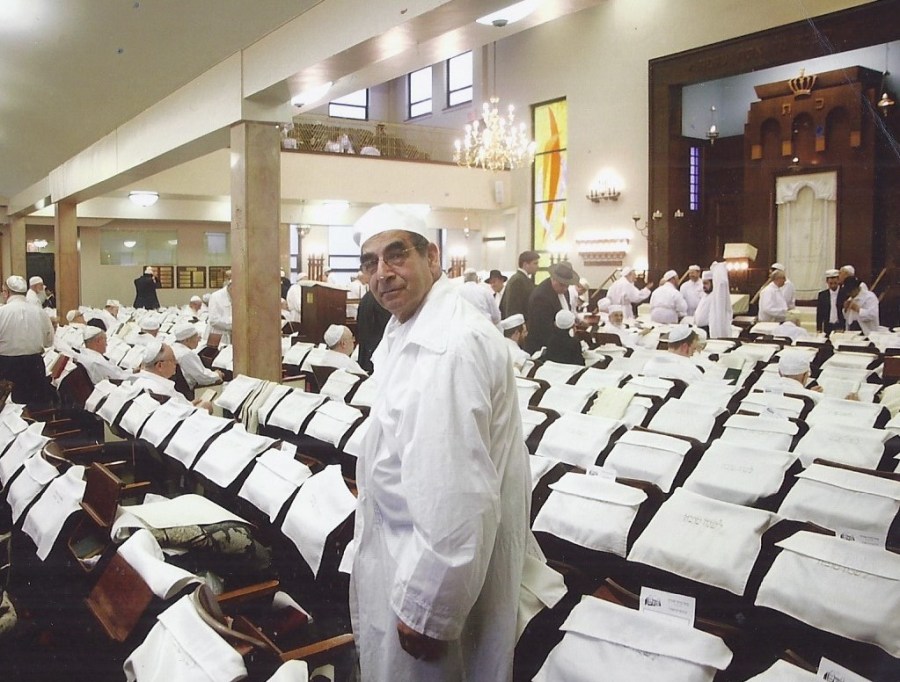
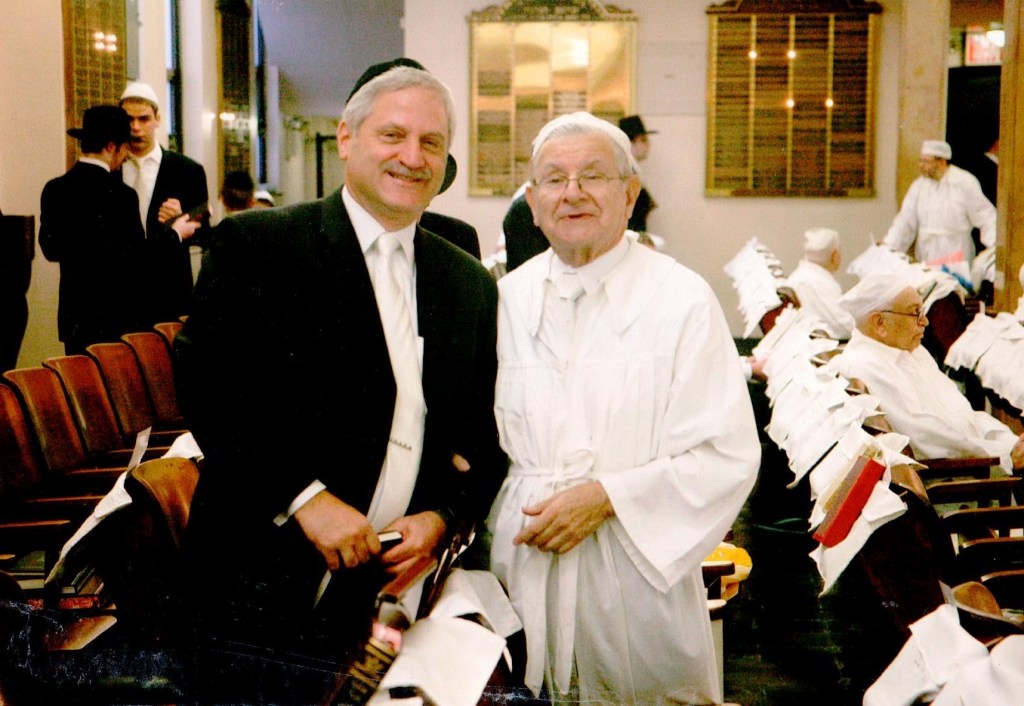
Many of us expatriated Yekkes can showcase our roots at this time through white ties and white Yarmulkas.
Someone in my neighborhood, whose father left the Heights as a teenager, wears his tie and Yarmuka proudly. He turned to me on Rosh Hashanah and asked why my Yarmulka is not white. In turn, I challenged him: “If this is so important to you, why could I not get you to attend our local start-up Yekke minyan even ONCE this whole year?” This ended the conversation. When I later asked him to join us on Shabbos Teshuvah, he had a bunch of excuses. So there are “Yekkes in white-yarmulka only.” (Something like the Kol Nidrei/Neiah Jews who once walked this country.)
Anyhow…in my childhood at KAJ I remember that many men wore a white cloth rabbinic-type Yarmuka that went with their Kittel. Some would just wear a white leather or velvet Yarmulka. Whatever they wore, the standard hat worn for davening was replaced with this Yarmulka.
My close friend, a grandson of Rav Schwab zt’l asked the Rav why we are not wearing a hat on these most holy of days!
Rav Schwab explained that these white head coverings, as they are explicitly worn to enhance Davening, satisfy the requirement for a special head covering.
I do not know if his answer “covers” the regular white Yarmulkas, or just the rabbinic type beanies that are used only in shul.
(I now explain to people when they talk about Yekkes and white Yarmulkas, that it is not a fashion statement, but a way to Daven- perhaps mimicking the angels who are described as “Ish Lavush Badim”, “the man in white linen”- and it is a replacement of the hat.)
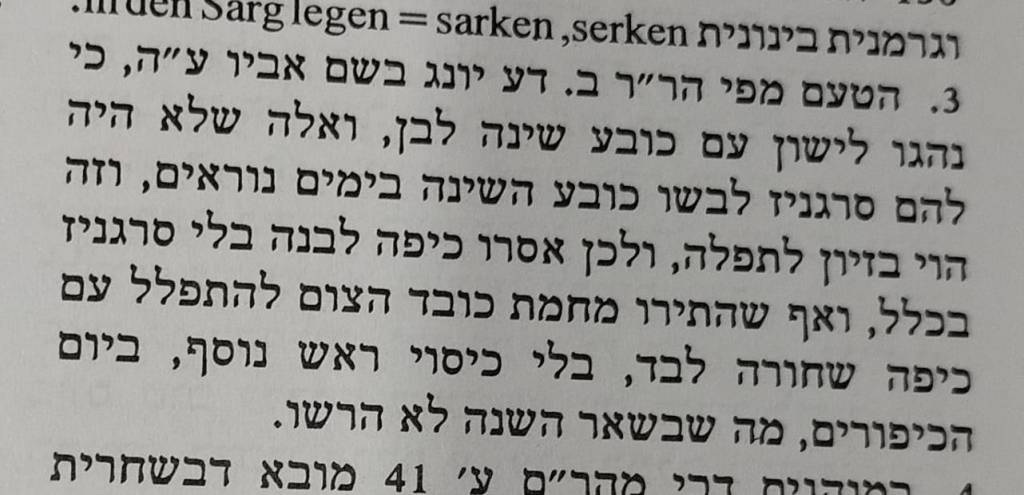
Now, on the much-celebrated Yekke WhatsApp group, my old friend S. Katanka has posted a page from the Minhogim of Amsterdam, where it is stated explicitly that the white Yarmulke, if respectable, replaces the hat. (The author is upset over those who just wore their nightcap to shul!) Clipping below:

“Even on the High Holidays, it is forbidden to wear a white Kipah if it is not a garment of the Saregens”
 schuster's hall