Our Alumni in WWI

I came across this plaque in a book about the community in FF, specifically in the chapter on the Realschule. It seems that it is similar to the WWII version in our shul, except that this lists the fallen in battle- and ours lists the enlisted men with two fallen.

My grandfather Max Meyer is a Realschule alumnus who, though he survived the war, died in his fifties of a wound sustained in battle. He was a field commnader and was standing to asess the situation when shot. A second bullet haeaded to his heart was interceptedby the large Tanach and siddur he kept in his backpack. My uncle is in posession of those books today with an inscription attestng to the date and event.

Where Did Rabiner Hirsch Live?

The well known address of Rabbi S.R. Hirsch in Frankfurt was Schoenne Ausicht 5.(see here) As the name implies, this address literally looks over the Main. This conjures up pictures of the saintly Rabbi sitting by a big open window- the big European type- with the flowing river and a little stone bridge just outside- as he pens his Gesammelte Schriften  or something.

The below postcard that was once on ebay and was saved to some other blog shows the postmaster crossing-out that address and substituing what appears to a spokesman at the Judische Museum Frankfurt as Thiergarten 52.

A directory from Frankfurt in 1852 has him residing at Hinter Schoenne Aussicht 1 a back street.

Finally, I am told within the community that his home was on the Schutzenstrasse 4, where the old shul was. In truth, the Schoene Aussicht address is around the corner from Schutzenstrasse, so this might be what was meant.hirschletter

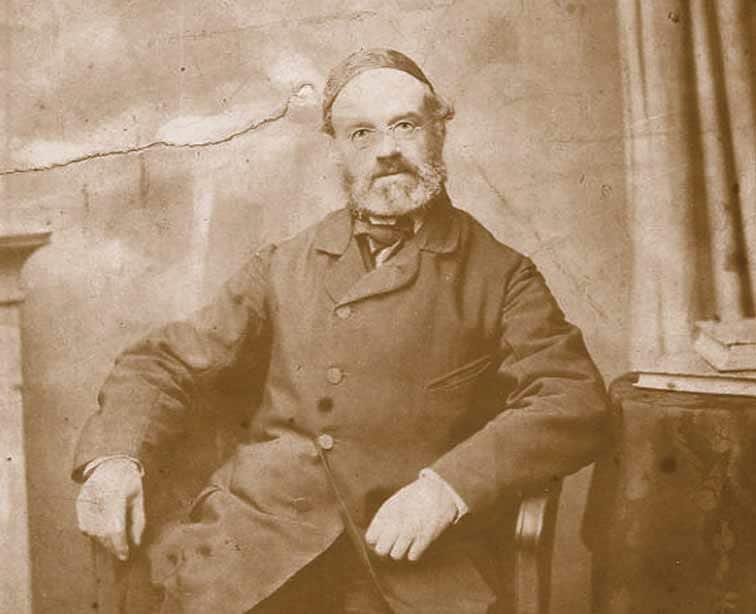
Best Rav Hirsch Pic

I consider this the best picture of Fav Hirsch zt’l. I have never seen it included in any of the publications of the Kehilla nor of the Rabbi Joseph Breuer foundation. It appears when doing a Google image search for Rav Hirsch and appears on the OU website among other sites. Below a vignette:

Forty years ago on a summer morning, we
children were taken for a walk along the “Promena~
den”, the green belt which surrounded the old town
of Frankfort-an-Main. We were not far from the
“Schoene Aussicht”, close to the bank of the River
Main where Samson Raphael Hirsch lived, when my
brother, my senior by two years. took hold of my
arm and whispered: “The Rabbi”. We stopped.
Accompanied by one of his grand-daughters.
Samson Raphael Hirsch, stooping slightly, but with
firm steps, passed by. He raised his hat to the two
small boys who stared at him with curiosity. His
dark eyes were lit up by a kindly smile on beholding
two members of the third generation of his
community. I have never forgotten the friendly
gesture of the Rabbi whose venerable figure had
become part of my life at a very early stage.

From Herman Schwab’s “Memories of Frankfurt/ Aus de Schutzenstrasse”-can be accessed here

Mr. Breuer

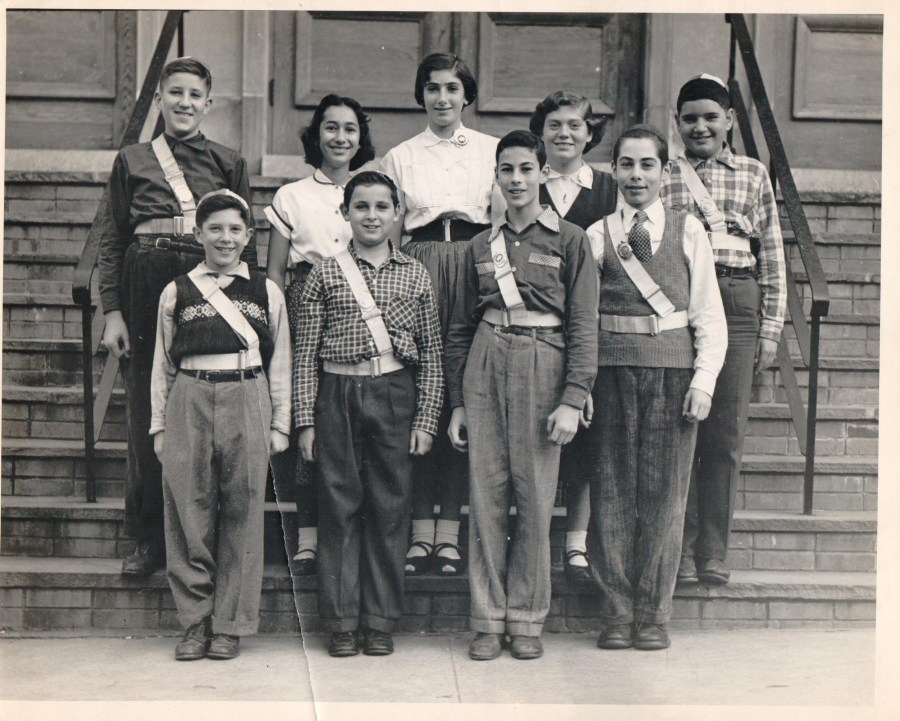
In this very early photograph of the Breuer’s school we see Mr. Breuer already acting as schoolmaster. What is important to know about Mr. Breuer, in my opinion, is that he was not the authoritarian school teacher of 19th century Germany. He was a soft, and  kindhearted person. Now perhaps someone who knew him earlier in his career would say otherwise- and I am sure in as long of a career as he had he might have a detractor, but I give here only my perspective.

As I remember Mr. Breuer of blessed memory, he always smelled like baby powder.

When he sometimes had to substitute for a teacher he would bring in riddles and little trivia quizes for the kids, sometimes based around  Hebrew grammar. I believe that Mr. Breuer had semicha, but refused the honorific “rabbi” not to be confused for his father.

If you were sent to his office he always spoke to you kindly and put his arm on your shoulder and sent you back to class shortly after.

Mr. Breuer did not marry until later in life. His father, the Rav, said that he never thought he would live to see the day.

I sometimes see a pattern wherein a great person has a child that doesn’t marry or doesn’t have offspring and that child is a devotee of his parent, helping perpetuate the legacy.

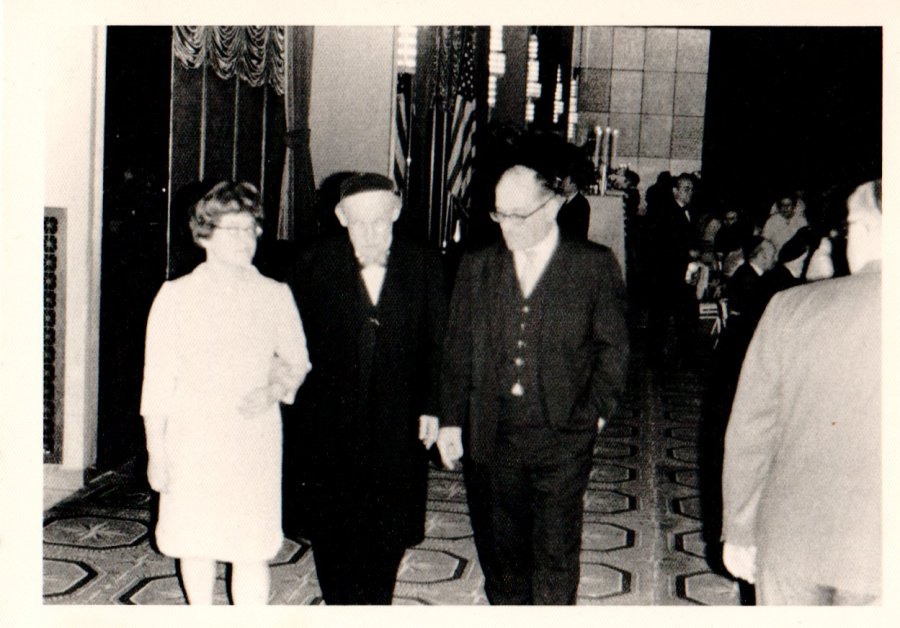
A story About Schuster’s Hall

One thing the Washington Heights community was known for in its years as a mega-kehilla was the devotion of its members to the annual dinner and the fundraising journal.
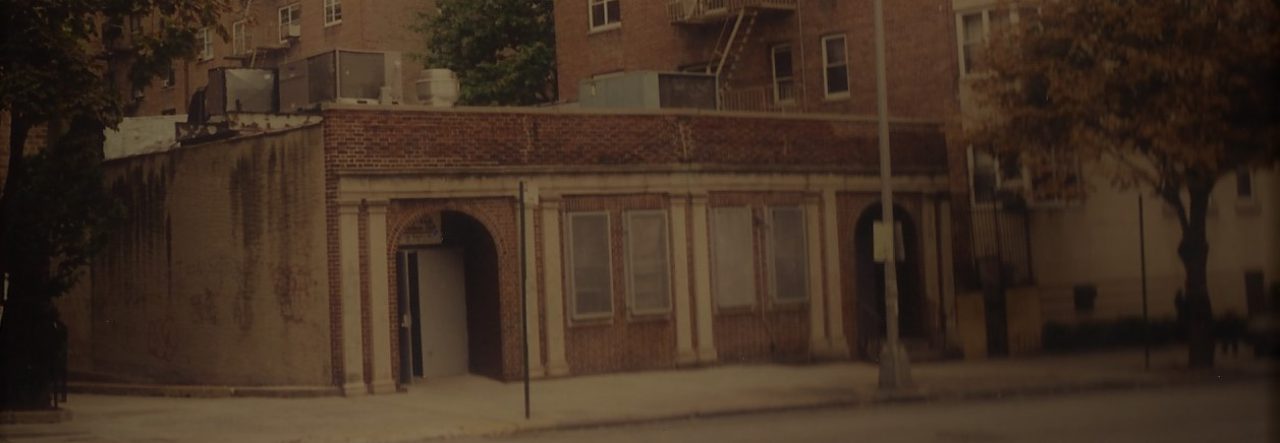
Mr. Schuster who donated the hall to the kehilla had a big business in New Jersey. The time came that he sold the business to a gentile businessman. As they are closing on the deal and they are done signing the paperwork, Mr. Schuster turns to the buyer and says, “ I want to tell you about the school I support in Washington Heights…”. Before he can finishing soliciting the ad, the businessman interrupts him, “ You have all my money now, you place the ad!”
I will assume my father heard this story from Jerry, and it  shows the allegiance to the Yeshiva of a generation!

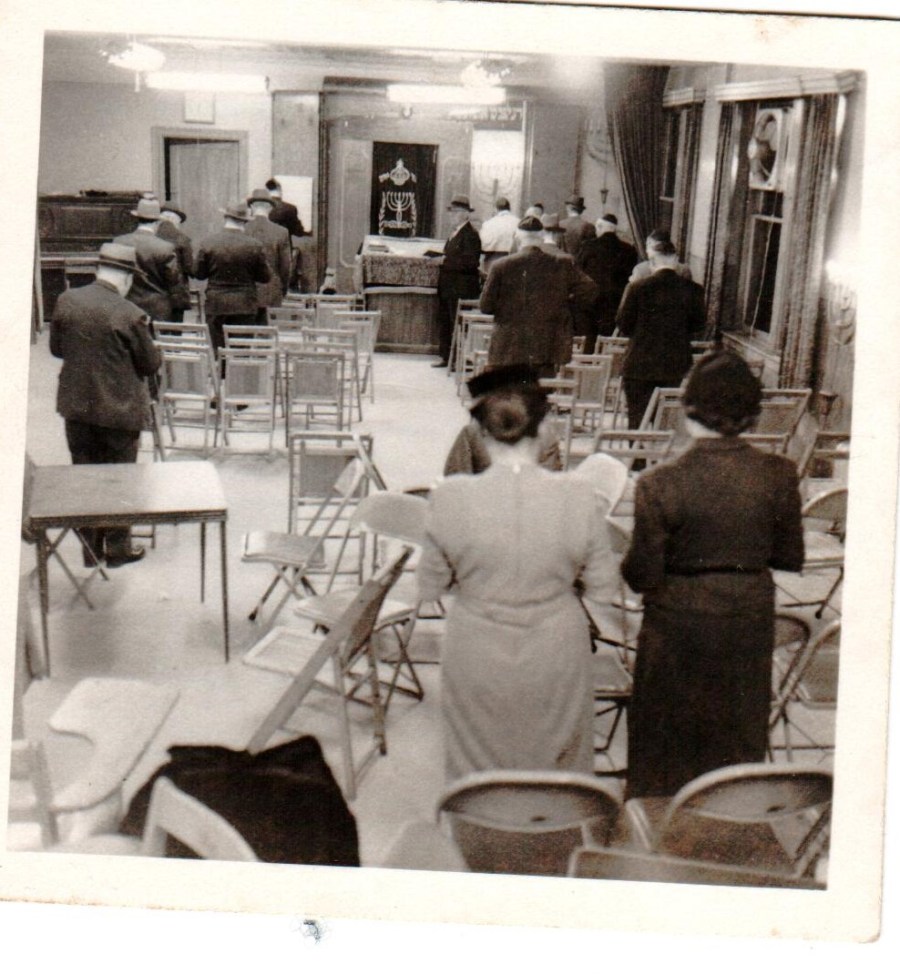
Can you I.D. this picture?

My father took it in the 50s. I vaguely remember him saying decades ago that it is taken in Schuster’s hall. Our comrade Pinchas B. says it has the same chairs as pictured in an early picture of Schuster’s Hall in the “Rav Breuer” book (top photo on the page following p. 176). That is a good call, but the layout of the room is small and different.

Perhaps this was a minyan in the front room of the hall…if there was a front room back then.

Anyone?