The Story Behind the Picture

I contacted Meta to ask about a fire that once damaged the venerable “Schuster’s Hall”. (According to Sidney S. it was the “Jacob Schuster Auditorium”.)

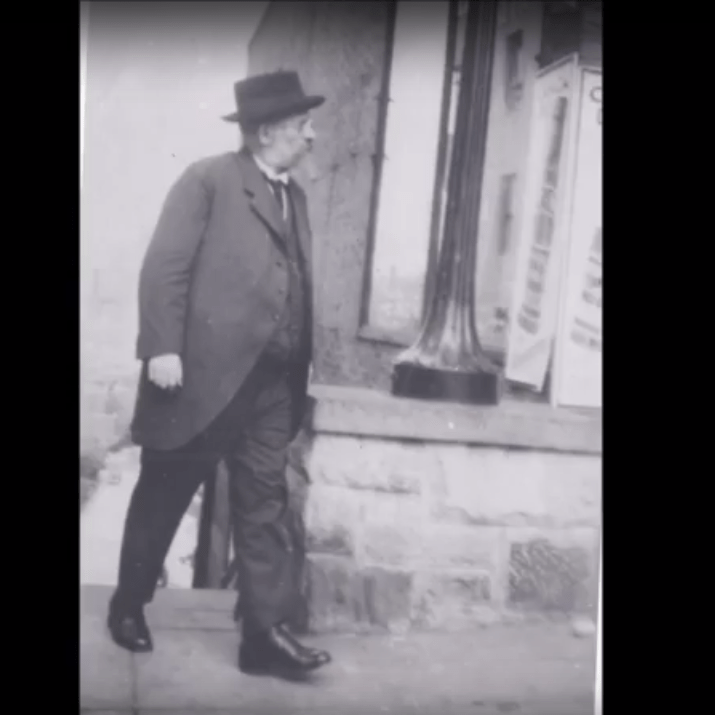
In her response which I shall quote momentarily we learn the story behind the picture of Rav Breuer ZT’L mounitng the top step of the unique super-stairway up to Ft. Washington Avenue. Remember, he never lived there. He lived on 181st Street, in the apartment occupied today by Mr. Schnerb hbl’cht.

So here it is:

Yes, Mendy, there was a fire in 90 Bennett in the basement, something with the boiler went wrong.  – I remember that the front room had lockers where people put their Friday pay checks – or cash – when they rushed from work to come to Shul. That room was not affected and the people got their money out.

So, it must  have been in the winter.

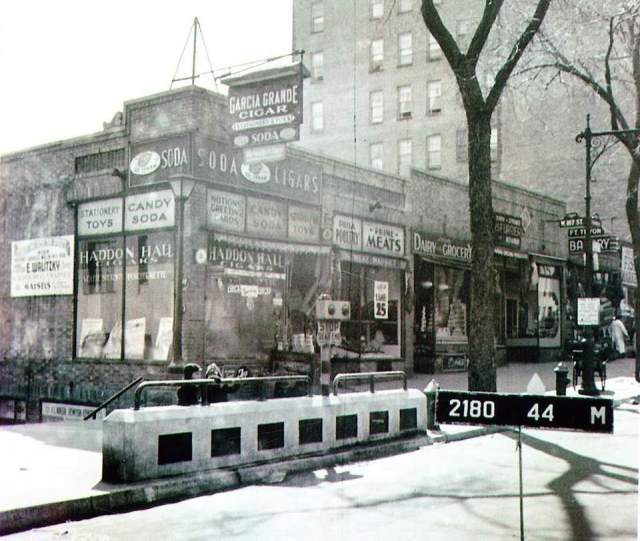
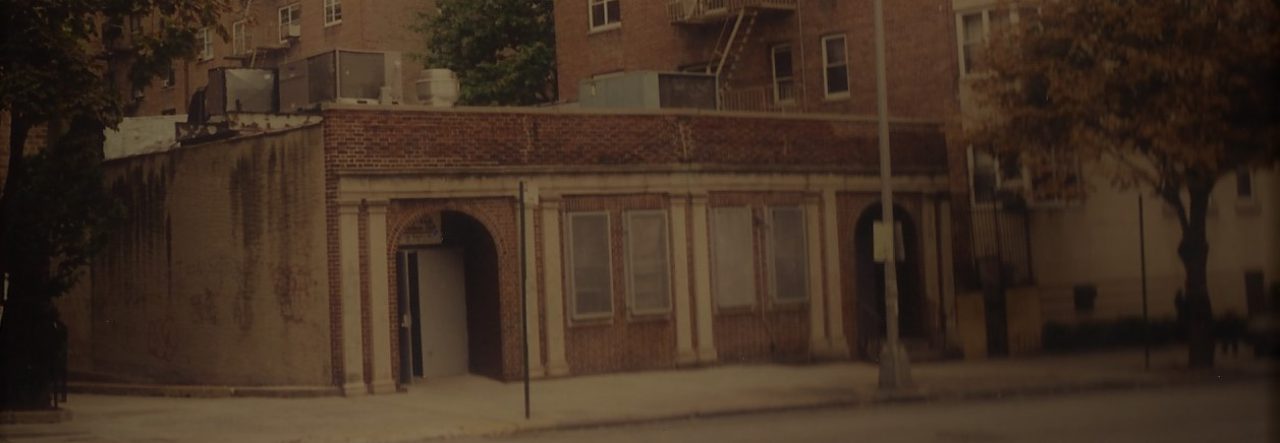
But repairs had to be made, and the place up the steps on Ft. Washington Avenue and 187 Street(which is now a Bank and next to it a large grocery) which became our Shul and Talmud Tora classes. I think a few months later we moved back to 90 Bennett.

I cannot remember dates or year.  But there is a picture of R.  Breuer approaching the steps on Ft. Washington Avenue.

ftwash187
This once was Breuers!

My New Tallis Bag

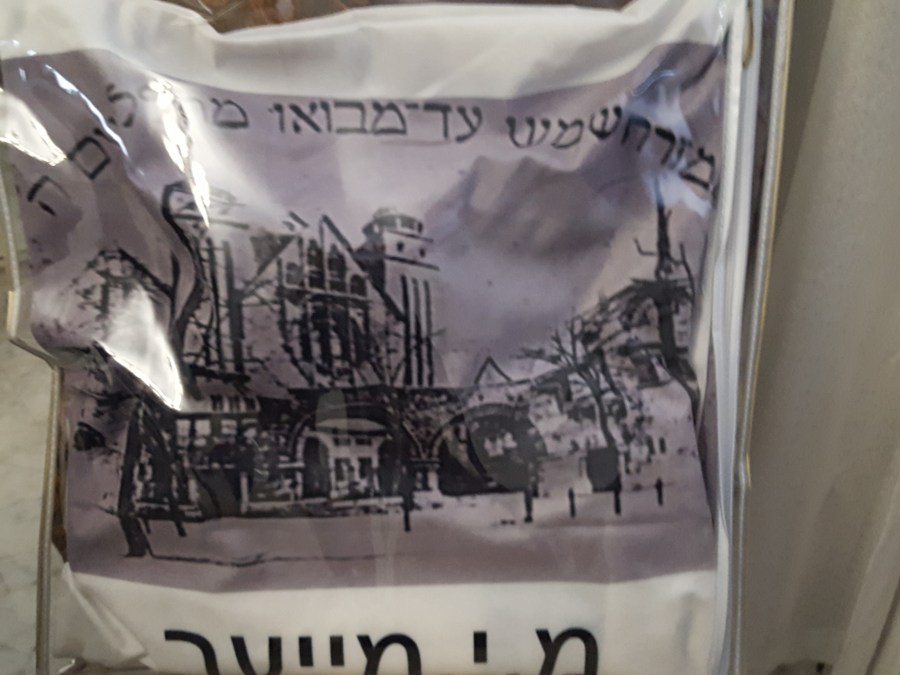
I ordered a custom throw pillow (stuffing not included) on Amazon for 6$. It ships from Asia so allow time for delivery. I bought a plastic cover at Eichler’s and for another 6 dollars. I have a picture of the old shul on Friedberg Anlage with the posuk “Mimizrach Shemesh ad Mevo’o”  …ממזרח שמש עד מבואו מהלל שם” From the rising of the sun to the place where it sets, the name of Hashem is to be praised.”(Ps. 113:3)

I don’t know the origin of this picture with the posuk over it, my father saw it hanging in Jerry’s apartment and photographed it. The picture is now on my tallis bag.

But here is the story of a different picture.

In the 1920s Mr. Henry Zimmer was living in Frankfurt. He was a furniture designer and was trained in sketch. He penciled this picture of the shul for his own use.

In his octogenarian years his son helped him record a CD of our familiar nigunim- sung raw- without accompanying instruments-  in Mr. Zimmer’s aging voice. The album was recorded in a studio and came in a pearl case with a jacket bearing the picture he drew in his youth. I will soon share it to my website.

Heirloom

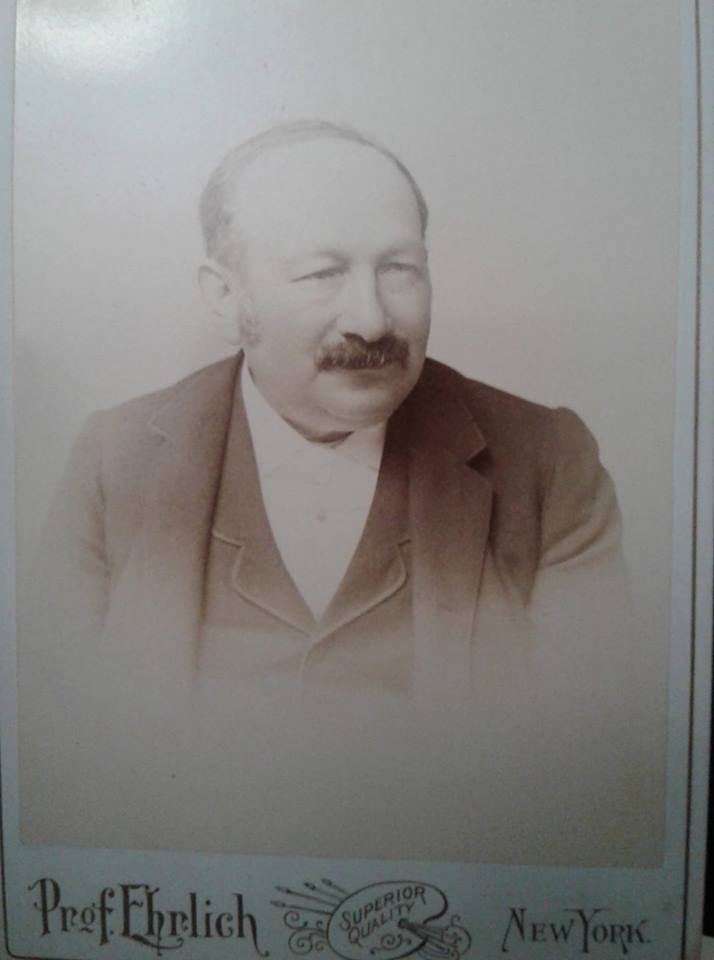
We descend from the Weil family in Emmindingen. I have several pictures of that family as well as an artifact of the famous New York philanthropist Jonas Weil (picture above) who founded the Bronx-Lebanon Hospital and the Park East Synagogue with his son-in-law Rabbi Bernard Drachman. Drachman was an early translator of Hirsch’s “Nineteen Letters” and a his story can be found here .

The artifact in my possession is a ledger of loans made by Weil to people and institutions as well as letters from the board of the shul in Emmindingen.

Drachman and Weil were also among the founders of the JTS.

On a tangential note. The Yekkes were early contributors and founders of the Sharei Tzedek Hospital in Jerusalem. My Uncle Asher Hirsch z’l was active in some of their American fundraising. Hermann Schwabb in his memoirs writes that the original seed money for that hospital was provided by the financiers of the Frankfurt Kehilla. This is a very long legacy indeed.

Today the hospital has become a cause of the Syrian Jewish community in NY as well. This year’s dinner ad has 5 or 6 guests of honor in the age range of 21-25. The hospital has realized that a base of young contributors is essential. There is also a German-Jew from Riverdale among the honorees. The event will be in an uber-trendy event-space under a bridge in the UES.

I think I am priced out of this one…


Good Shabbos!

In the video just posted on the famed German-Jewish painter of the 19th century, Moritz Daniel Oppenheim, we focused on some of the themes in his works. There is a lot of juxtaposing the ancient with the modern; apt for the 19th century. In the blog post here by a Lit. Professor at Touro, we read of some of these themes in the Shabbos-Ruhe depiction of a lazy Shabbos afternoon.

How lucky we were in Washington Heights to have a park to sit in on long Shabbos afternoons, and all we had to do was climb a mountain to get there!

Recently on a FB group of Yekkes around the world someone wrote, “From its location (at 155th Street and Riverside Drive) this may be what a long gone friend of my parents wittily called the “Kölner Bank.” But he wasn’t referring to a Bank of Cologne. He meant it was the park bench favored by the immigrants from there.” Riverside drive was the Shabbos-Ruhe for many German Jews in the southern region of the neighborhood once.

Enjoy this nice recording from an old choir practice once here


Two Things to Investigate…

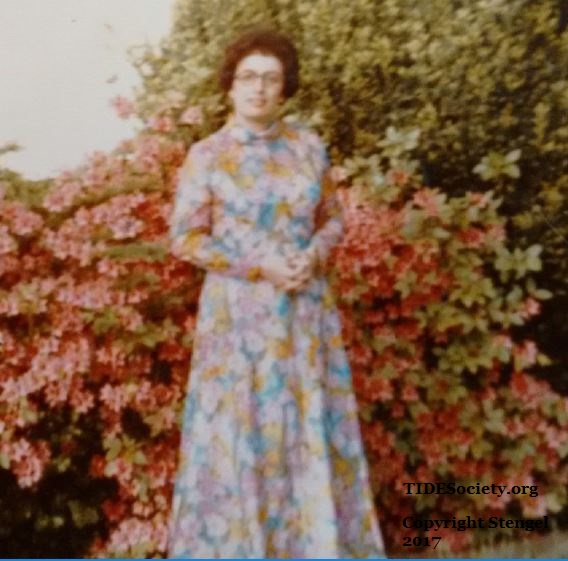
Gertrude Hirschler (Photo taken from the Tidesociety.blogspot.com) translated many of the Hirsch works into English. Her bio here.


The above mentioned bio says she removed her name from the Hirsch siddur over a conflict with the editor pertaining to the final draft. This should be investigated. Was something omitted? {After this was posted I was told by Proffesor M.Miller, that Dr. Bondi told him, that the editing went beyond her vision of the final product, but did not amount to a significant change.)


Secondly, in Steven Lowenstien’s “Frankfurt on the Hudson” he quotes from an unpublished manuscript of her’s titled, “Washington Heights; The Rise and decline of an Inner-City Jewish Community”. I imagine she didnt publish this out of sensitivity to the community that remains. But, people! We need to see this!


After a quick look, the librarian at YU did not locate it among the Hirschler papers stored there, though someone who could spend an afternoon there might come up with it.


Anyone looking to collaborate? (It is very hard to reach Dr. Lowenstien.)

We Were So Racist


In the video I’ve just posted we will focus on two small shuls in the lower neighborhood of the 160s and below. Ahavath Torah and Tikvoh Chadoshoh were vibrant religious centers for German Jews, some who identified as  “Traditional” and some who identified as Orthodox.

Many of the children of these congregations attended Public School and did talmud torah as an after-school program.

Predictably, as seen across the American Jewish landscape, whether these children would remain traditional or join the likes of the liberal Jewish Community was up in the air.

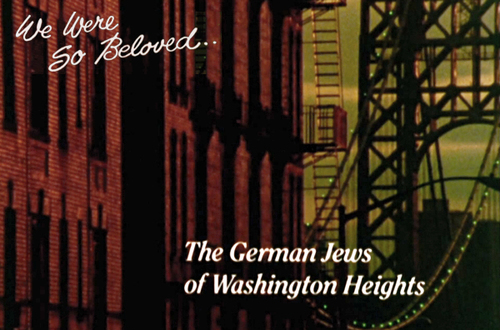
In the movie ” We Were So Beloved”, Manfred Kirchheimer revisits his childhood in the early 1980s (released in 1985) and recounts with his parents, his friends, and their parents- the horrors of fleeing Germany, surviving, and arriving in the United States. He touches on many issues along the way including, righteous Gentiles, American inaction, survivor’s disillusion with both societies, and the power of charismatic leaders and mob-mentality.

Manfred also admits that he once tried to join the Orthodox men of the daily minyan, but the lifestyle did not last. He and his three friends featured entered the heart of the Liberal Arts world- with he and Walter in motion-pictures, Max Frankel sporting an obnoxious cigar in the Times editorial room, and a zany anarchist academic weighing in with a sob-story about his rearing.

Towards the end of the film Manfred takes his carefully guided introspection somewhere very dark. He elicits the fear and the skepticism his parents’ friends had for the newer immigrants in the neighborhood, namely the Hispanic and the Russian arrivals. The interviewees express some indignation over the fact that US policy had changed over time and immigrants were accepted without affidavits and with immediate access to public support. They also feel sidelined by the seeming disinterest of the new arrivals to learn the language.  

Simultaneously, Kirchheimer introduces a dark episode in the career of his Rabbi in which his congregants either mis-judged or, as suggested,overreacted to a report about the rabbi.  

Without a great deal of discretion he prods the rebetzin in to saying that the congregation’s group-think was analogous to the behavior of the German people under Hitler. Even if this was the rebetzin’s own formulation out of reliving the stressful episode, including it in his “introspective” documentary was cheap fodder for where he was going next.

Continuing the line of moral relativism- the religion he picked up when he left Orthodoxy, Manfred in his closing segment defecates in public by showing the mild xenophobia of his parents’ generation as analogous to the attitudes of the Nazis and their sympathizers and certainly well below the idealism of the Gentiles who took risks on behalf of the Jews.  

Now, I will not jump on the moral-relativism, because I consider it an outlook on the spectrum of opinion (though it often yields a good chuckle e.g. “Palestinian-BDS Pride March”, yeah, try hosting that in Ramalah), but I call out the superficiality of comparing mild-xenophobia to the complicite united effort of the “ordinary men” who killed 6 Million Jews, mercilessly, including one million children (!) and another million political rivals, Gypsies and other marginalized peoples, though in a less coordinated way.  

There is no connection between the attitudes of his parents and the German conspirators. Because only merciless hate can bring to the atrocities of Nazi brutality and German indifference -and hate was not present in the voices of his interviewees.

He glazes over the weekly reports of muggings, push-in robberies and auto-theft that plagued this neighbirhood during those years and instilled bitter fear in his parents. You see, Manfred had been occupying an “Ivory Tower” pre-war apartment in the low 100s since the mid 1960s. One of the neighborhoods famous for strong and united vocal opposition to the inclusion of low income housing or homeless shelters.


The towers of the uppity west and east sides of New York are just high enough for flinging stones at people who live, love and coexist with recent immigrants…even if they sometimes sigh at the hardships sharing a neighborhood often brings.

Two more points that went over Kirchheimer’s white- mane- and- moccasin debonairism:

  1. xenophobia is good. When one has a phobia, which is usually associated with an involuntary reaction, the person is on the alert. Always testing the waters and re-aligning his defenses. If you think all immigrants/others are bad, then you are in for a lesson in the holiness and humanity within each human. If you think all immigrants are good, then you are in for a lesson in the “dog-eat-dog” nature of the inner city. But if you live in an ivory tower and engage with humanity on your own terms…well then you protest the homeless shelter.  
  2. The Torah has many intricate laws that don’t seem to create better people. These laws permeate the life of an Orthodox Jew. The laws do not automatically shield him from the human folly that lurks behind the corners of life and its moral tests. But the laws fine tune the person, so that should that person be a thinking introspect, he will not stop his brain at the first opportunistic opportunity and he will not allow superficial analogies to satisfy him. He is used to corroborating his ideas with the tenets of justice and love, and as he knows his G-d you can’t have one without the other. He won’t call his parents Nazis to satisfy his friends.  

I don’t fault Manfred. He espoused what he was taught to think, and alot of good has come out of people like him. I see in him the lost generation south of the bridge, but because I have a fondness for those people and an innate respect for the faithful, I detest the disparagement he shed upon the friends of his parents.  
Men of the Minyan

My Uncle Asher Hirsch Z’L was a very special person. Too special for a short blog post. After his childhood was wrapped up and put on a Kindertransport, he grew up a child survivor in Atlanta, Georgia. He worried and cared for his siblings that survived with him. He saw them assimilate into American society, and he knew how much this would pain his deceased parents. (One brother, Ben, returned to his roots and raised a vibrantly religious family).


Asher returned to Germany as a soldier with the occupying American forces- only to find nothing remained of his previous life.


Marrying my aunt Hennie in Switzerland, they returned and he held positions as the leader of congregations in New York’s Astoria Queens and the Bronx. There, too, he worried. He worried that the services would be attended and run properly. He worried for his congregants and their life cycle events. And he worried for the education of their children.


His oldest son, Naftoli must have taken this to heart, and while he was not a Rabbi, he took his experience with him everywhere he went.


It wasn’t long after he and his wife Ruthie moved to Washington Heights that he would have the keys to the Breuer’s shul as the gatekeeper of the Hashkomo minyan. He stuggled and worried to keep this minyan vibrant and viable- even when members complained about the need to have a hashkomo minyan at all.


He soon became an active leader of another underdog minyan- the Mincha Gedola at the Agudas Yisroel of Upper Manhattan. Uncle Asher always preferred davening the Mincha Gedola (midday) and I remember walking him to the Agudah many Shabbosim when it was at its ancient location on 178th Street and Audobon.


The theme here is obvious. Daven Shacharis the first chance you have, daven Mincha the first chance you have. In his Yad Vashem testimonial Uncle Asher recounts that as a young boy, not yet Bar Mitzvahed he would ride his bicycle to the Hashkama minyon in Frankfurt’s Khal Adath Jeschurun.


And long into retirement, Uncle Asher would host the early mincha of Shabbos in his living room with his own Torah scroll.


Davening early, and faithfully consistent to they minyan was the connection between Uncle Asher and Cousin Naftali.


When Uncle Asher led his congregations he never allowed any song from the amud that would involve repeating words of davening. One Shabbos as they sang the Zemiros at their Shabbos table, young Naftoli remarked that the Zemiros tunes had repetition of words. Now, one could draw a distinction. But for the sake of consistency Uncle Asher took the criticism seriously and altered all of the family Zemiros tunes to avoid repetition.


The name Naftali comes from the words of our mother Rachel, “Naftuli Elokim Niftalti”- I have waged a spiritual struggle. It also seems to have the word Tefillah in it. Uncle Asher and Cousin Naftali took the struggle of properly attending to and worrying for the neglected services in Hashem’s houses of devoted prayer.


Yehi Zichrom Boruch

Three Videos on Tisha B’av

These appear on my lesser known channel for minhag and nussach, Legacy Hirsch.

The first is with Dovid Roth of the National Library in Jerusalem explaining some unheard of minhagim in therecitalof Kinos that he documents from 18th century Italian sources, but were clearly the minhag of the “Kalir” as well. See here.

The second is me singing the kinah Amarer Bivchi which is sung every year by our shamash Victor S. IT is not perfect, but I wanted to record it.

The Third is embedded here, and contains 3 versions of Elie Tziyon, including Japhet’s which we don’t use…ironically. But I think we might use it among the kinos. (Additionally there is a video about Kristallnacht in Frankfurt here . May Hashem redeem Zion and her mourners, soon,)


Guide to my Videos of General Interest

I was asked to publish a page that provides a menu to the videos on my YouTube channel by topic.


It is important when viewing the channel to click on the button that says “videos” which brings you to the entire collection. Here I will provide links to the videos that are of interest to the general public, not just locals from Washington Heights. By clicking on the hyperlinks you will access each video as described.


1) The story of the former Secretary of State Henry Kissinger’s boyhood in Fuerth and Washington Heights. Click HERE.


2) The History of Congregation Sharei Hatikvah, the first German-Jewish shul to form in Washington Heights. Part 1: Click HERE. The story of the first Rabbi, Sigmund Hanover, the Shul’s roots in Wurzburg, the amazing artifact from Germany that is embedded in the walls and the difference in lifestyle between the Jews of the countryside and their ability to coexist with the liberal Jews in their communities because of the simpler size and lifestyle of these hamlets.


Part 2: Click HERE. . The story of the shul’s Hebrew school and the memorable Walter Hes  and the HISTORY OF THE WURZBURG SEMINARY!


Part 3: Click HERE.The story of the second Rabbi, the memorable Abraham Krauss how he was suited to both the immigrant generation and the first American-born Orthodox generation of “baby-boomers”


Part 4: Click HERE. The story of the previous Rabbi Abraham Gross and (may he live long) the current Rabbi Abraham Hoffman- but chiefly an emotional tribute to the shul and its struggle to hang by a thread. A tribute to the simple and devoted German Jews who graced the halls of this synagogue.


The story of the founder of modern German Orthodoxy in Frankfurt, Rabbi Samson Raphael Hirsch. It is a bio, but ends with questions whether American Orthodox Jews NEED his philosophy of Tora im Derekh Erets (meaning the synthesis of Torah and living in the modern milieu) – or if it is outmoded by modern streams of Talmud learning and spirituality (Hasidic thought). Click HERE.


The story of how the youth of Washington Heights continued the Frankfurt tradition of Talmud study while pursuing college degrees, mostly in the trades and professions. The irony that many of these youth were later employed in Wall Street trading houses started by German-Jewish bankers. Click HERE.

The emotional story of the destruction of the IRG Shul in Frankfurt (Friedberger Anlage) on Kristallnacht. Click HERE.

I intend to write a menu to include cultural videos such as choir renditions and cantorial chants in the future.

Kiddush of Abraham Katz

The kiddush that is associated with our Chazan Frankel is not the well known Lewendowski piece, but a lesser-known piece by Cantor Abraham Katz of Amsterdam (pictured above- photo from chazzanut.com). A quick Google search will lead you to the website devoted to Chazanus of the Netherlands called chazzanut.com


Amsterdam Chazanut seems to have been an influence in Chazan Frankel’s unique style. I am told that he owned a collection of records by the late Hans Bloemendal. Chazan Bloemendal seems to be the most widely published Chazan of the German tradition, and some of his work has been released on CD and can be purchased on Amazon. 

(His bio from Geni.com: Hans Bloemendal, born in 1923, was a scientist and a chazzan. He started in Fulda, Germany, as a chazzan and composer, and painted as a hobby. In 1937 he fled with his sister to Amsterdam. During the war he was hidden by a Dutch family in the Uitwaardenstraat in Amsterdam. He survived the war, but his parents and only sister did not.

He became a professor, teaching biochemical research at the Radboud University in Nijmegen, specializing in the eye lens and also functioned as chazzan in the Jacob Obrechtplein synagogue in Amsterdam. His chazzanut has been recorded on several CD’s. At the age of 65 he received the honorary title of main cantor.)

Abraham Katz’s bio and book of compositions is available on the above website.


The particular kiddush- which I posted last night to the YouTube channel has been in use in the Netherlands in various forms as the moderator there records. In Breuers the thing to do was to sing along the word “Zecher” as Chazan Frankel climbed that little progression with the gentleness of ice cubes clinking in a whiskey glass (sorry I am not great at analogies). And that is just one of our things…