On the Calendar and the Leining

Some Things To Ponder

Here is something you may be wondering about our calendar and the Torah Leining.  

We are currently not Leining the same parshah as they are in Eretz Yisroel due to the last day of Pesach falling on a Shabbos for us, while it was a regular Shabbos in Israel. So they Leined Acharei Mos, and we didn’t Lein it for another week. 

Now, we will not “catch up” to them anytime soon, despite the fact that we are encountering two sets of Parshios that could have been combined (Acharei/Kedoshim and Behar/Bechukosai). Why not? 

The reason is – in a nutshell- that the Israeli calendar this year is not ideal at all! 

1) They will have seven Shabbasos between Pesach and Shavuos to say the six perakim of  Pirkei Avos. While the six perakim normally fit neatly between the two holidays, they are left with an extra Shabbos. (This would not be relieved by our catching up with their Parshah, I am just pointing out the oddity of this calendar year for them.) 

2) They will Lein Naso on the Shabbos preceding Shavuos. As per the Minhag laid out by the Gemara, we ought to lein Bamidbar before Shavuos, so that the penultimate Shabbos prior to the Yom Tov has Bechukosai- with Moses’ rebuke and then a week to separate the rebuke from the holiday. In Israel they will have two weeks to separate the rebuke from the holiday. 

3) Sometimes, those in Eretz miss Leining Pinchas in the “Three Weeks” (17,Tamuz- 9, Av) when it is customarily read. In such a year we refrain from “catching up” by making “Chukas-Balak” into one Sedrah, because this would deprive us from reading Pinchas in the three weeks as well.  

The question arises regarding this year, why we are not realigning with Israel on Chukas-Balak, since we would still have Pinchas within the Three week mourning period?

I have reached out to our friend R’ Yisroel Sidney Shlita and he wrote to me as follows:

                Rav Mantel said ….. this year he always says none of the restrictions (or Haftarah) of the Shabbasos of the 3 weeks apply on the 17th.

                Note in those regular years that the 17th falls on Shabbos (2018, 2029) most shittos don’t combine Chukkas-Balak  (“Catch-up” was never an issue before jet travel) so we in chutz la’aretz try to sync at Bamidar leap years and regular year kerios and are not concerned about what goes on in E”Y.

                Also our Yosef Ometz (FFaM) says in order to double up parshios one waits until the last moment, hence Chukkas-Balak is only together outside E”Y when 2nd day of Shavuos is Shabbos.  He obviously would have held in E”Y in 2018, 2029 to combine Behu-Bechukkosai and not Tazria-Metzora`(in order to make Bamidbar the Shabbos before Y”T)!!

In brief, the Shiva asar btamuz fast that falls on Shabbos would not indicate the beginning of the Three Weeks. I assume, then, that the Lecho Dodi of the bein hametzar8m is not used that Shabbos either. Secondly, before jet travel it was never seen as an objective to align the kerias hatorah with Israel. Finally, it is a rule of thumb to push off the combining if parshios.

I am linking HERE  to an article that appeared in Yated Ne’eman in 2016 and one or two ideas about the significance of Pinchas falling out in the Three Weeks from an old email chain with our resident yaadan R’ Yisreol Sidney S. : 

“RE: I once heard an additional explanation.  Parshas Pinchas is typically read during the Three Weeks. The Minchas Yitchok (al Hatorah) explains that this is because Pinchas contains inyanim regarding dividing Eretz Yisroel and Karbanos – something we yearn for during the Bain Hametzarim when we mourn the loss of the Bais Hamikdash 

If Chukas and Balak were read together this year, Pinchas would be read before the Three Weeks which is not lchatchila. So, in Eretz Yisorl where there is no option (because all the parshios this year need to be separate), Pinchas is read before the Three Weeks. However, in chutz laretz by not combining any parshios (until Matos and Maasei), Pinchas is lained during the Three Weeks (the lchatchila method). Keeping the above in mind in chutz la’aretz, we would rather not change the seder of the calendar until Matos and Maasei. 

Somebody told me a related answer in the name of the Benei Yisaschar (OK that is the way the sefer is pronounced but in KAJ and other Western European shuls it is always read Yissachar even the 1st time), which I did not look up, a similar reason.  Namely that in Pinechas the Benos Tzelofchad want the land and that is what we are waiting for now!” 
Rumple Nacht On My Mind  

There is a name for the night on which we return our Pesach dishes to their storage. It is called, “Rumple Nacht”.  

I have heard the name used for the night in which we remove them prior to Pesach as well, but this is not the common application of the name. No, Rumple is the process of returning those dishes. 

I want to wax wistful for a moment, and assume the voice of a female blogger- like a mommyblogger – who can write sentimental thoughts about seeing her children growing up or her favorite coffee mug.  

Because amid the tumultuous rumble of the “Rumple” there is a ceremony going on that was familiar enough to the cycle of the Jewish calendar to warrant a name.  

So the ceremony evokes thoughts, and it also makes a person think about the previous year’s Rumple, and what has changed – or “how the kids have grown”- et cetera.  

The first thought that hits me with the Rumple is how “just yesterday we were taking these dishes down with the whole Yom Tov in front of us, and here we are putting them away already!” 

This is the Tempus Fugit moment in every Chag- and every anticipated event in our lives; the moment that the event switches from standing in front of us to fading behind us. We all know that reflective thought. 

But there is the Rumple-through-the-years sentiment that comes with this ceremony too.  

Because we only use our Pesach dishes for one week a year, they last for a long time and tend to stay within a family for generations.  

Sometimes, because of this, the Pesach dishes are not up to the trends of the day. You may have an avocado-green cereal bowl or a cake knife with a yellow handle. You can’t part with these relics, because they are the sole survivors of your childhood things. In my case, besides for those 1970s themed pieces, I have some knives with “P/M” (Pesach/Milchig) etched into the side with the precision that only a master–mechanic from another era and continent (Dad z’l) would care to devote to his Pesach cutlery.  

When Pesach comes, these keepsakes go into use again. A year older, both me and the cutlery, we meet again to dig ourselves into starchy Pesach sponge cakes and oily Matza Breis. But after a week of Pesach shenanigans, the green bowls and the yellow knives are again put to rest, and life needs to go on.  

The clatter of the everyday Rumples its clanky tune and the sweet childhood memories of Seders and visiting uncles- of Pirchei trips and afikomen hiding places- of childhood and grandparents- slip quietly away into the shoebox in the Pesach closet. Until winter will give birth to spring next year. 

Leshanah Haba’ah B’Yeruslayim.  

On Purim and Kichlos Yeini (Kikhlot Yeini)

As Purim approaches, I sat down and arranged a recording of a tune to the piyut “Kichlos Yeini”. As you can read here, this is a short song often assumed to be the work of Shlomo ibn Gabirol, the 11th century Spanish Paytan. The author was invited for a meal at his friend Moshe’s home and when the wine ran out he was served water. In jest (or anger) he writes this song that seems to deride and even curse the friend. 

The tradition to sing it on Purim lends itself to the idea that it is all in jest. 

Ultimately, there is no overt religious message to the poem. This itself is not odd, as many of the Paytanim in the Moslem lands had written seemingly secular poems, as were popular. Some of them even with erotic or homoerotic themes.  

Though, that itself may be shocking, it is likely not more than a popular art form. 

Important to note, the son of Shmuel Hanagid insisted that every word of his father’s poetry was directed at G-d and an expression of his holy love for the Divine. (Diwan Samuel, quoted in Kramer, Joel L. Maimonedes; The Life and World of Civilizations Greatest Minds. New York: Doubleday. 2008  Ch. 2, fn. 55)Similar to the theme of Shir HaShirim, where we are quite comfortable with the use of a Moshol.  

Was this meant to be lighthearted fun, or does it have another, deeper meaning?  

On the one hand, it has been printed with Purim songs, on the other hand, the very fact that it has been found in siddurim – and not just collections of poems may imply a religious overtone.  

In any case, what I find fascinating is that although this has not been widely published in recent centuries, the tune has survived in several families! The tune I had recorded this week (click here) was shared with me by a good friend, a grandchild of Dr. Benno Heinemann z’l. (Dr. Heinemann is known to many through his English translation of the parables of the Dubno Maggid). This is the tune his family has preserved. In order to preserve it, the family has it printed in the benchers that they give out at family weddings.  

The version they insert has the familiar typeface belonging to Roedelheim siddurim. Nevertheless, it does not appear in the Roedelheim Siddur, Baer, or even in a small booklet called “Seder Purim” printed by Heidenheim. So it remains unsolved, just which Roedelheim publication ever had this. 

Happy Purim. 

(Several years ago I arranged the recording of another tune for Kchlos Yeini. See here.) 

Updates and News…

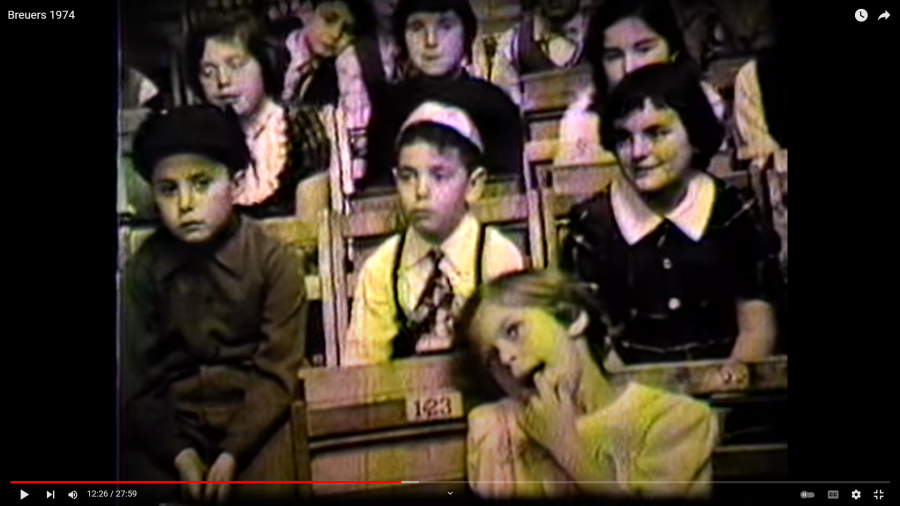
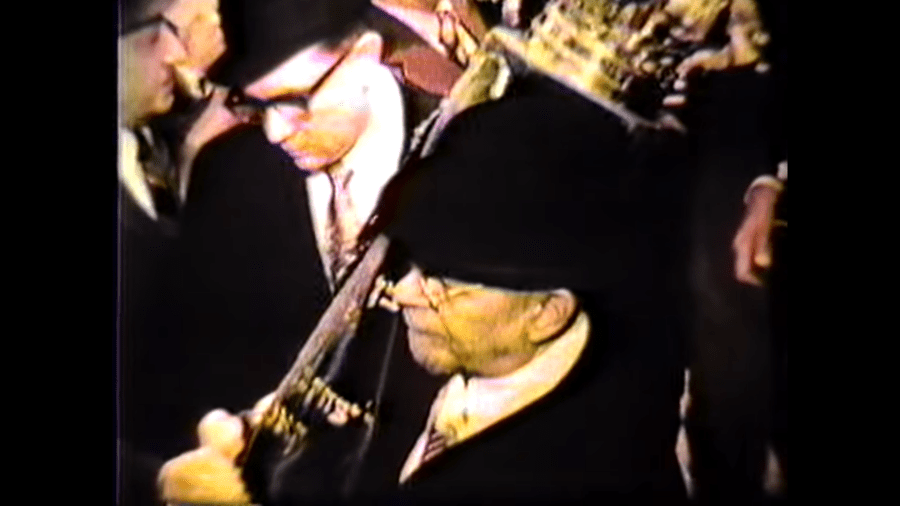
One of the most important and most-watched videos on the YouTube channel breuers 2gether is a movie my father z’l made in 1974 for the annual dinner. This was long before the attendees of a Yeshivah dinner were shown videos about the honorees and the cause they came out for. 

Dad brought his 8 mm camera down to the school and shot movies of the kids, teachers, and parents in action. 

The Movie also has some rare invaluable footage of the Shul in Frankfurt, the Friedberg Anlage- as well as shots around the neighborhood of Gruenebaum’s bakery, the butcher shops, and the like. It is 28 minutes long in total! 

Long ago I decided that one day I would have it digitized professionally- at great expense but at a price worthy of the preservation of history. 

Well, yesterday, that day came, and I drove the film over to a fancy studio at the edge of Brooklyn.  

As I took it out of the box that it sat in since that night in January of 1974 I realized that I was born a few weeks after this production was made, and it became my hobby to make videos about this place just the same. 

Two more items: 

I want to launch a website for the preservation of audio pertaining to our roots….So. I will be reaching out to all of you in the next few weeks asking you to send me recordings of yourselves singing your family’s zemiros! Remember. None of us knows what the other has been singing! This would be a great way to compare and contrast. Details to follow. 

Finally. I hope to launch a Tanach podcast in the next week or so. I am very excited about this, and if you have gotten into the spirit of listening to podcasts, you will know that the good ones are few and far between.  

All the best! 

Let’s be honest; Maoz Tzur Doesn’t Sound Jewish

Maoz Tsur as sung in its most widespread traditional tune is unlike anything else in the modern liturgy of Orthodox Judaism. 

A quick Google search will teach you that it carries a piece of a religious call to (Christian) prayer by the great Bach. And perhaps an old military march as well.  

But let’s be fully honest. It is as close to a Christmas carol as they come. And yet it got a foot in the door and is here to stay. 

Is it scandalous? Maybe not. 

The holiday of Chanukah commemorates a historic battle and a  miracle menorah.  

But it has a religious message to our community. The ancient Hellenistic Greeks and their culture are long gone, but there remains a continued struggle for the Jew to retain his faith in the face of cultural pressures. In the free world, we are beckoned to melt into the host society and leave our religion at the door. Chanukah reminds us that we have Divine wisdom and the Divine spark. It reminds us to celebrate the soul in the face of the Greek worship of the human form. 

But after we have rejected the ills of society, we have been told by the Torah itself that beauty is the endowment of Yefeth, the father of all that is Greek.  

In fact, the rabbis of the Talmud, who lived at a time when Greek culture was still dominant, taught that a Sefer Torah may be written in Greek letters. That is the only language that we may transliterate the Torah with. 

“The beauty of Yefeth shall dwell in the tents of Shem” is the rabbinic term that they derive from Noch’a prophecy. 

It seems that Yefeth was given the gift of the arts. And not in a passing way, I would suggest, but that their take on art and design would endure. So that today we still celebrate their architecture (every federal building in this country is designed after the Greek-inspired Roman edifices), as well as their literature, language, philosophy, and theatre. I would even suggest that modes of art and architecture that are not Greek may only be offshoots of their grandiose ideas in designing. Meaning to say, that perhaps the beautification of a structure may not have become a “thing” if not for their elaborate edifices.  

The rabbis saw that beauty- even of Greek origin- has value, and can even be employed in the service of Hashem.  

To this day many shuls have pillars as part of the aron hakodesh. (Lately, it has become a shtick to make the Aron resemble the art on the shaar blatt of the Vilna Shas- which itself was drawn by a non-Jew.) 

So let’s be honest. Maoz Tzur is a churchy song that we have adopted, and it makes Chanukah beautiful and meaningful. Perhaps it takes away the pining we all have to hum the jingles we hear each year in the department stores. And, at the same time, it is a welcome break from all the rest of the standard nigunim of today that are Chasidic in inspiration.   

Big Doc Dump

Okay, I have gone through many papers sitting on a shelf, gathered through the years by my father z’l, all pertaining to our community and its history and personalities. Added to this is a collection that Mr. Joseph Katzenstein z’l had collected over many years- consisting of koleinus, newspaper clippings and some KAJ Newsletters (the “Kach”). Some of this is nostalgic, and some of this is of historical significance. For this reason I will be posting this on both my website and this blog. I want to give credit to my teacher and reliable friend, our beloved Rabbi Gevirtz who was the author of some of the more important material below (specifically, the booklets given out by the Yeshivah).

Here follows:

Several booklets distributed by the Kehilla itself on special occasions :

  • A book of short bios on important kehilla figures on the 50th anniversary of the shul

https://drive.google.com/file/d/18N1WCXCimL86ic-RefYcA9T1RFwIuXfn/view?usp=sharing

Then several Newspaper and magazine articles from various publications over the years:

Several mitteilungen articles including:

Two leinin tidbits in the parhsa

From the archived material of Mr. Benno Weis z’l. I was told by a bar mitzvah boy who studied under Mr. Weis that the famous Karnei Parah (and Yerach ben Yomo) which appears once in the Torah (and once in the Megilas Esther) was leined in the summer when the regular Baal Korei was away in Frankfurt. And, therefore, his tune for it was not necessarily accurate. It clearly mirrors the corresponding trup in megillas Esther available here. Karnei Parah in Esther HERE.

I bounced this off of a current KAJ baal koreh and he thought the idea that his karnei parah is improvised sounds false. Mr. Weis’s daughter confirmed this – that he didn’t learn it from the regular baal korei, and had to “make it up”- but won’t swear on its accuracy.

Anyhow….here is his rendition off of his archived recordings (available on the website of Dartmouth University and currently in the process of being shared more widely)-

Here is a sampling of the reading of the Masa’os in the parsha.

I am working on confirming the above further, and might elicit the above in the style of one of the current baalei keriah at KAJ. I will add their contribution then.

Tidbits of our Memories: The Auxiliary

For my father’s upcoming first Yahrzeit I have begun to record all the family memories and history. I will post tidbits here that relate specifically to his Kehilla and community interactions.

The 1970s and 1980s were a very dark time for New York City. Crime was ever-present. Whole swaths of the city (particularly the Bronx) were filled with abandoned and burnt-out buildings. The subways cars were covered with graffiti inside and out. Drugs, particularly “crack-cocaine”, infested the inner-city. Muggings abounded as well as push-in burglaries. Gangs of teenagers roamed the city at night in a frenzy they called “wilding”. And, most ubiquitous of all, cars were routinely burglarized as they sat parked overnight. People removed their car radios and purchased removable radios called “Benzi Boxes”. Then the car owners would hang a sign in their window stating, “No Radio on Board”. This didn’t always help. One particularly bad month had Grampa’s car robbed three times! The third time the guy was still in the car when Grampa approached it.
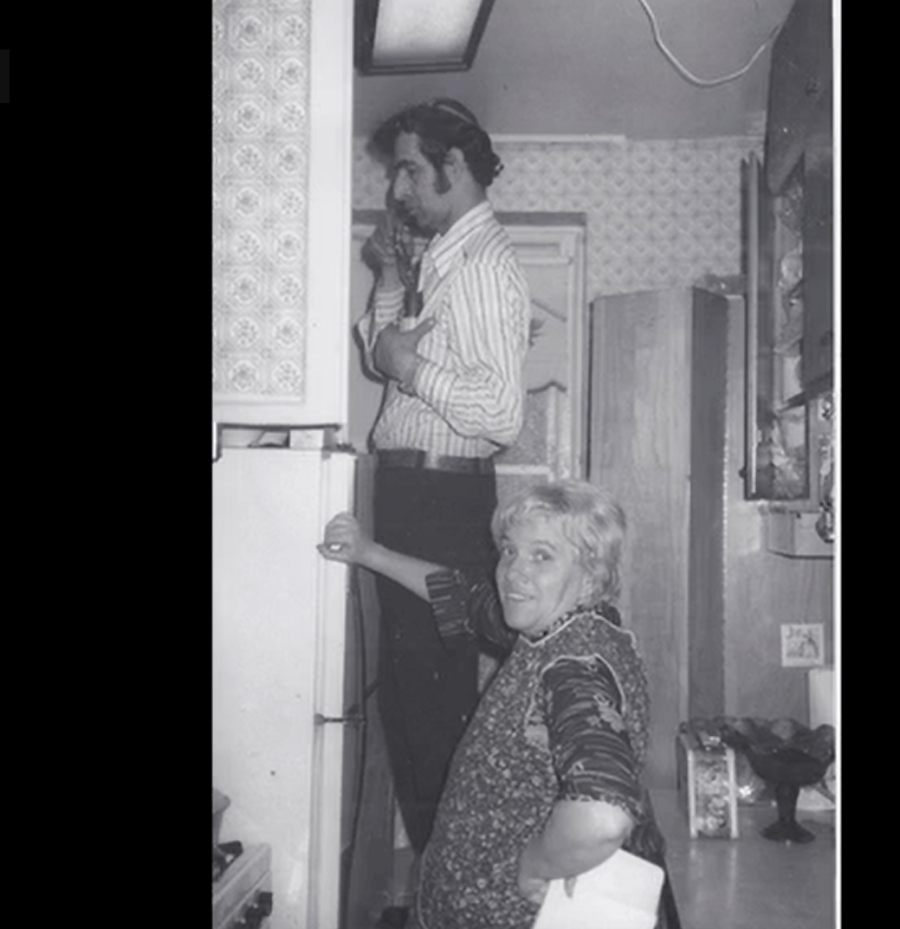
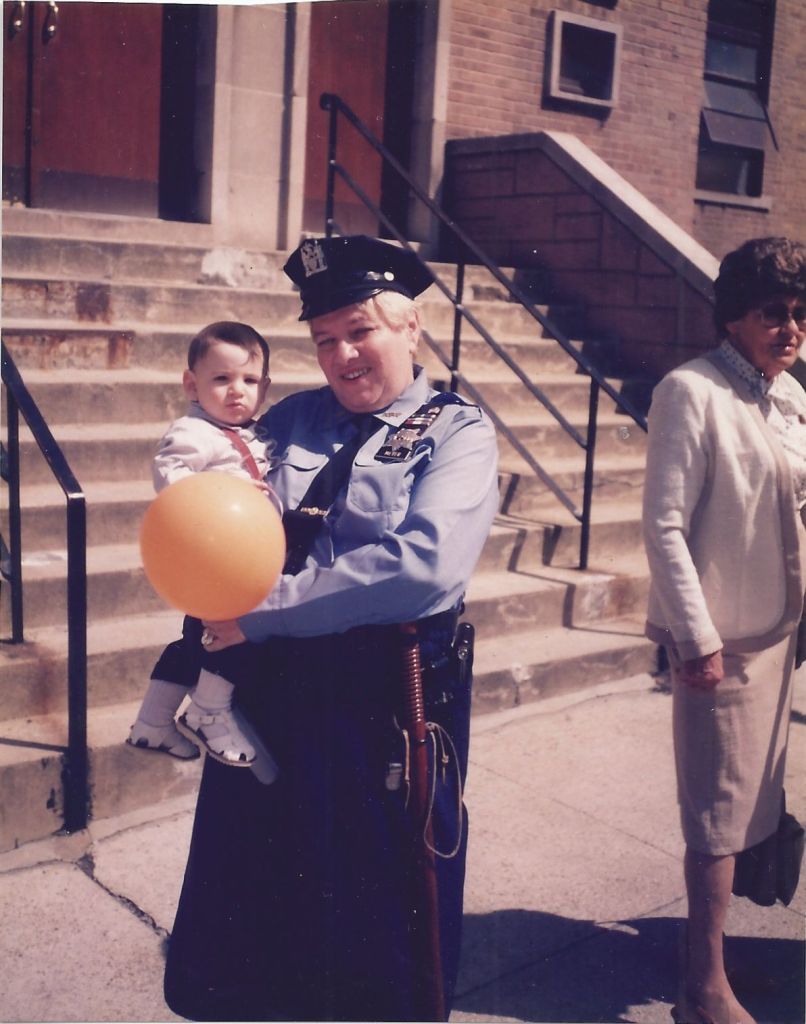
In the height of all this crime, Grandma saw an ad for enrolment in the Auxiliary volunteer corps of the NYPD. She and Grandpa both signed up. She felt that they could help the community improve and that Breuer’s in particular would gain from having a liaison right in the shul. They took their training but not until Grandma was able to secure permission to wear a skirt. Since policewomen had originally only worn skirts, someone in headquarters gave the okay.
From the time they joined, Grampa went out on a twice weekly patrol and Grandma only patrolled at “crowd control” events such as parades and street fairs. The rest of the time she accumulated her hours by volunteering as a typist in the reports room. This was a particularly fun job for Grandma because she had knowledge of what crimes were occurring and in which part of the neighborhood.
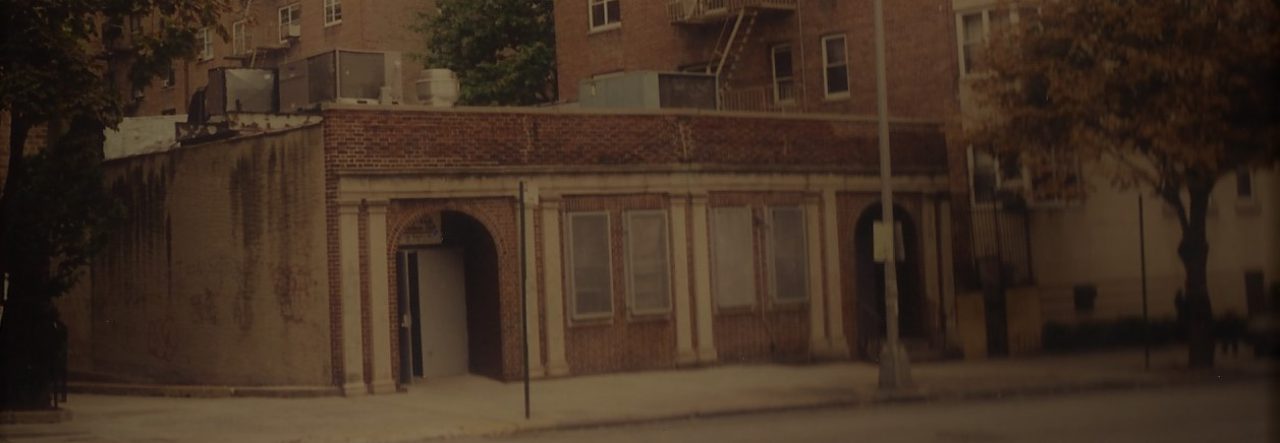
Grampa and Grandma’s building was once a very popular Jewish building with a mix of German Jews, YU students and couples, and families affiliated with shuls east of Broadway. By the late 80s it lost much of its Jewish community as crime in the city increased. By the early nineties it was probably time to move out. Grandma wouldn’t move because she was too proud to move down to Bennett Avenue, where she thought the people were too sheltered (perhaps). She felt that if she were to move it would be to Boro Park to start over in a neighborhood that had “all the conveniences”. Grampa, of course, would quicker live in his car than move to Boro Park. So they remained.
Living on the “wrong side of the tracks” had its pitfalls. Loud music from neighbors, including on Shabbos afternoon. Drug deals immediately in front of the apartment windows. People sitting outside at night congregating. Actually, the people congregating was a plus. Muggings in the city often take place on a quiet block in a peaceful neighborhood. Congregating at night is part of Latin American culture where villagers meet in the town square for dominoes and eating after working a full day. These people in front of their buildings were not the criminals but the citizens.
Sometimes, someone from the Breuer’s part of the neighborhood, of the type that lack scruples, would ask my mother why she does not move out of her building. The best way to handle such a blunt question would be a short and humble reply like, “It’s not perfect, but it’s home!” or “We have certain things that you don’t have on Bennett, and we don’t want to give that up!” But Grandma was a proud woman, and she was from the Bronx where the girls had some sass. She would quickly answer with her knowledge of the police reports. “Well, your building isn’t so safe. There were two muggings there and a burglary!” In truth she was right for shutting down intrusive questions and she was right that, ironically, crime was lower in our area- if you didn’t count petty drug peddling.
During their time as auxiliary police officers Grandma and Grampa received several citations (in police and military lingo that is a good thing, it doesn’t mean a traffic ticket) for helping apprehend criminals. Not for chasing them- but by calling or radioing in suspicious activity and license plate numbers or calling for assistance. That is all the auxiliary police is supposed to do. If they would chase criminals, they would need full training and a gun.
On one occasion they got a community member out of trouble. There was someone from Europe living in the community. One day he gets a traffic ticket and explodes at the officer, calling her by the color of her skin. Grampa received a phone call that this person was in a holding cell at the precinct waiting to be booked. Grampa came down and talked to the captain explaining that people in Europe speak that way and are not used to normal race relations. His calm manner and logical way of talking sent this guy home.
Grampa also received recognition for his service on 9/11. He was called that afternoon to help direct traffic off of the West Side Highway, away from ground zero.
As he remained in the auxiliary police Grandma complained to him that he rarely received a promotion. She was probably right that they were avoiding his promotion because there were one or two anti-Semites above him. For instance, occasionally if Yom Tov fell out on his night, he would sign the troupe in, but not close the books until after the Yom Tov. One time that he did this his commanding officer called the house at 2 a.m. and left a message on the machine asking when he will sign out. Haters can’t hide things for long.
As time passed it became inevitable that he receive a promotion. He became auxiliary sergeant, lieutenant, and eventually became the captain. As captain he taught the young troops how to salute and stand for roll call, as well as other formalities good for their discipline. He became a respected figure at the end of his time there.

The Image of the Idiot

The third and fourth son in the Haggadah, the simple one and the one who doesn’t know to ask, are Pesach characters.  But in my father’s youth, they were used by kids to chide each other year round. 

The One who deosn’t know to ask is depicted by Roedelheim as having his two arms out before him one higher and one lower. Perhaps he is grappling with things, or so young that he is learning by touch? 

Among my father’s friends, the gesture of extending the arms this way when joking around meant, “not too bright, ‘eh?” 

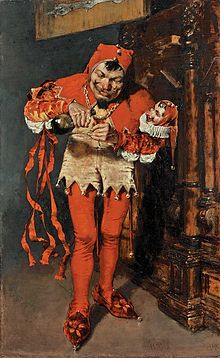
In  this   cute article, the author, Touro’s Avenue J campus dean Dr. Henry Abrahamson, explains that early editions of the Maxwell House Haggadah borrowed 17th century woodcuts from an heroic convert from Christianity. Among the artwork is that imbecilic child with his hands asunder.  

So, we have located the source and according to that article, the little son appears in the Amsterdam Haggadah of 1695, with the art engravings of Abraham bar Jacob, the convert. it is actually a borrowed image of King Saul as he appeared in Christian literature. Now, I don’t believe Saul was depicted by the Christians as an imbecile. Perhaps they were showing him as a child per a literal reading of (Samuel 1 13;1) “At age one Saul was king”. <Now this might be unlikely as modern day Christian Bibles have the text “At age thirty Saul was king”. I do not know which version 17th century Christian scholars followed….but some scholar out there might know?> 

(I removed a paragraph about a Hagadah that I thought preceded the Amsterdam Haggadah)  

Back to the Maxwell House Haggadah, I would venture that they didn’t borrow the illustrations straight from antiquity, but that their Haggados in the early years were copied from the Roedelheim. I always noted the one or two differences in the text that we are used to – were to be found in the Maxwell House as well. The post 1900 Roedelheim went with the Hebrew facing the translation on two columns of the same page, something Maxwell adopted too- and had these old woodcuts with the “Little Saul” character. A favorite of little boys in pre-war Basel. 

Good Yom Tov! 

Rav Hirsch’s Yahrzeit # 132?

I received two emails for the 132nd Yahrzeit of Rav Hirsch z’l. Now simple math would tell you that from 1888 until 2021 is 133 years. I almost was going to email both parties (Agudas Yisroel and Rabbi Eiseman in Passaic) about this miscalculation. 

Luckily, I reached out to Reb Sidney Yisroel S. about this first. His response: 

” The KAJN letter of which I am one of the proofreaders also said 132. 132 is correct. He was niftar on the 2nd 27 of Teves of 1888 (the one in 5649 not 5648).  Note that 1889 had no 27th of Teves.  5781 minus 5649 = 132.” 

I.e. The year 1888 had two 27th of Teveth in it. The first in January 1888. The second in December. It was a very early year that year- with part of Chanukah in November. Looking on Hebcal, I find that Rav Hirsch passed away on December 31st of 1888.  

This corroborates a well-known story (I found it in Professor Leo Levi’s article in Jewish Action magazine. It does not appear in E.M. Klugmann’s book as far as I can see) quoted below from that article: 

“He had many opponents, some of them quite virulent; but no one ever challenged his absolute integrity. On the first day of each quarter, his congregation paid his salary for that quarter. When he started feeling weak in his old age, he instructed his family that when he died they should return the overpayment for the remainder of the quarter. Perhaps it is more than a coincidence that Rabbi Hirsch passed away on December 31, 1888, the last day of the quarter.” 

Below is a description of Rav Hirsch’s levaya from  of Hermann Schwab’s “History of Orthodox Jewry in Germany” pg. 90: 

“On the 27th of Teveth 5649(December 31st, 1888) Samson Raphael Hirsch passed away. On the following day the present writer and his classmates were standing in a vast crowd before Hirsch’s house. They, the preparatory class at the grammar school of the Religiongesellschaft, were to take their places immediately behind the sons and the relatives. Before the carriage were to walk the senior pupils, carrying Hirsch’s works in their hands- “Thy righteousness shall go before thee, the glory of the L-rd shall be thy reward”.  

The writer goes on to frame Rav Hirsch as a lover of peace, one who longed for peace, were it not for the need to save his people. He writes further: 

“And if the community which he founded in Frankfort and all the others built on its model have disappeared, and his literary legacy too is in danger of being lost to the world (published in 1950 ed.) the interpretation of Judaism which he gave to 19th century Germany is still a spiritualising force. Like a ray of light it travels over the earth and no one can detect it or divine its goal. But whoever crosses its path is shown the greatness of Judaism- “even one is enough, Israel’s cause is not lost.”