
Mourning Jerusalem and a Long-Lost Friendship

As we sit in the Nine Days, we think of our place in Golus and the events we have faced as a people in the cycle of history.

Our place as a people has alarmingly become front-and-center in the media. People are talking about anti-Semitism while watching it in play with the approval of the biggest universities, municipalities, and elected representatives. People too young to know that certain verbiage, imagery, and opinions are, actually, ancient tropes and accusations- redesigned to fit a narrative meant to bolster the most sinister nations that hate both Israel and the Jewish people.

And the rest of us are sitting here watching all of this unfold.

 Politicians who made a career out of supporting Israel, marching in the parade, and shaking hands in Jewish neighborhoods now deliver condescending remarks critical of Israel that seem to have been handed to them by the White House.

All of this, we as Jews believe, is because the Jewish people are becoming distant from our Torah, our best selves, and our homeland.

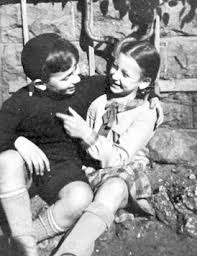
In one of the first videos that I posted on the history of our Shuls, I spoke about the life of Rabbi Hanover z’l- and how he fled Germany as the last Rav of Wurzburg. He sent his youngest daughter, Ruth, to Holland as he and his wife fled to America. Sending for her later, he could not obtain a Visa. His older daughter went to Israel with his stepchildren, Rabbi and Mrs. Hanover were in America, and Ruth never made it out of Holland.

Yehudah Amichai was an Israeli poet. Perhaps Israel’s most famous poet. He was raised Orthodox but became a voice for a religiously skeptical Zionism. Still, among his poems are Jewish thoughts and struggles.

Yehudah was also Ruth Hanover’s childhood friend in Wurzburg when he was known as Ludwig Pfeuffer.

Amichai would write about Ruth at the end of his life, and it was through her that he viewed the Holocaust. According to his girlfriend from his college years, “Amichai had an argument with a childhood friend, Ruth Hanover, which led to her cycling home angrily. Ruth was caught in a traffic accident, as a result of which she had to have a leg amputated and felt guilt and responsibility. Ruth later was murdered in the Holocaust. Amichai referred to her in his poems as “Little Ruth“. (from Wikipedia)

It is possible that her childhood disability complicated her Visa process and led to her being trapped in Europe.

As Amichai carried the picture of Ruth in his heart, Rabbi and Mrs. Hanover carried the guilt of separation with them as they came to these shores until word came that she was deported in 1943 and eventually perished in Sobibor.

With the memory of his daughter and his community in his heart, Rabbi Hanover set out to lead the Shaarei Hatikvah community in Washington Heights.

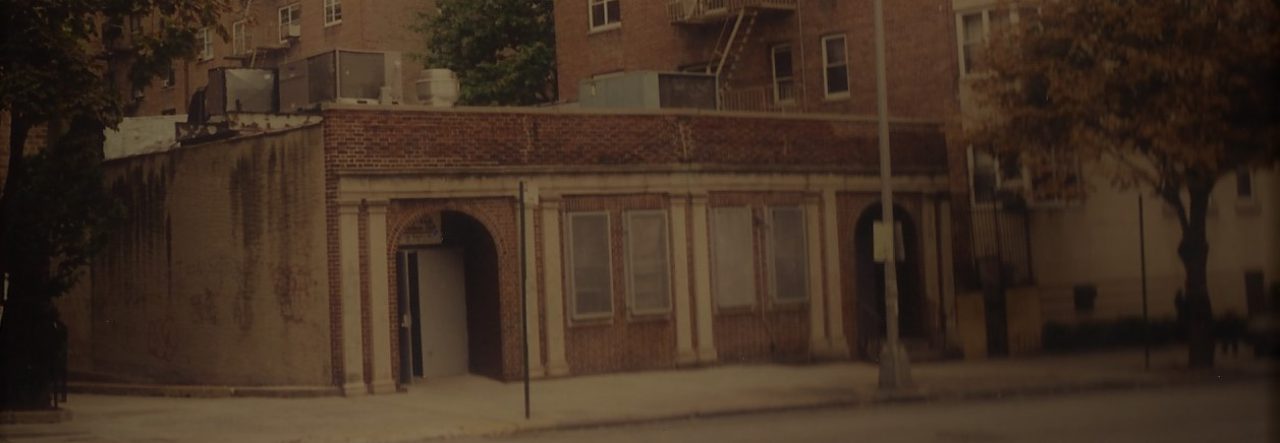
Analogous to the heavy memories these refugees carried with them, Rabbi Hanover brought something else with him. He brought a stone from the destroyed Shul in Wurtzburg, which he was to embed in the new structure on 179th Street.

It is now some 80 years since that stone was embedded on these shores and that structure is now up for sale. I hope someone will salvage that stone one more time and deliver it to the city of Jerusalem one day soon.

(Much of the content from Yad Vashem)

A Blessing Upon Your Head. Part 2

From the Google group of Avraham Aumann (Google translate from Hebrew with corrections):

“I received the following story from a friend of Ben Ashkenaz,

Maybe it can strengthen us in the beautiful custom of blessing the children.”

My father, Shlit” a, taught for many years in Neve Yerushalayim in the Har Nof neighborhood in Jerusalem.

English-speaking girls who knew nothing about their Jewish heritage received lessons in Judaism, faith, and knowledge of the mitzvot at “Neveh.”

But much more important than the lessons they received were the life lessons learned when they saw the conduct of Torah and mitzvot observant homes.

My parents would invite girls to almost every Shabbat meal to taste the taste of Shabbat.

The special Siyata Dashmia that accompanies those engaged in repentance is very miraculous.

The Almighty brings them success in various forms they have not even dreamed of.

One day, one of the women – a Baalas Teshuvah, told my mother (HKM) that at the very beginning of the road, when there were still many debates about whether to take this bold step,

she was invited to a Shabbat meal with a few other friends.

Of course, everything was so new and intriguing that they followed everything closely and with pleasure, even to things we don’t usually notice.

“When I saw all the children approach in order, first to the father and then to the mother, and bow their heads to receive the blessing of the sons, I was moved.

The scene really touched my heart, and I decided that I wanted such a family!

This was my main drive to repent and build a Torah house.”

A Jew for All Seasons

“A Jew for All Seasons” was the name of a play put on by the ladies Achdus group of our community in the 1980s. If someone is interested in seeing it (women only, please) please contact me.

But today I am talking about the Sefira. 

The Minhag not to shave, cut hair, or listen to music in the Sefira is observed as a remembrance of the loss of the 24,000 students of Rabi Akiva in the third century. As such, it is a form of mourning (see an earlier blog post about this point here). 

It has become almost ubiquitous in America to observe the “first” Sefirah. In Israel it is already the de facto Minhag, and they refrain from weddings after Lag Ba’Omer as well- until Chodesh Sivan. But one of my students was surprised that the Rema’s Sefirah Minhag (Rosh Chodesh Iyar until early Sivan) is not given precedence by Ashkenazi Americans over the Beis Yoseif’s.

I am aware that some people who are in the workplace among non-Jews need the first Minhag so that they can grow a beard over the Pesach vacation and return to work with a beard as opposed to stubble. Others might have chosen the first Minhag since Pesach already precludes shaving and allows music, and this removes a whole week of Sefirah and ends it earlier. Oka-a-a-y.  

But I want to point out that the idea of waiting for Sefirah until a time that the festivities of Pesach have fully passed makes a lot of sense and avoids the seeming contradiction. (Although the Rema’s minhag does have Sefirah observance on Rosh Chodesh…so there is some overlap of Aveilus and Simcha in this Minhag as well.) Interestingly, the Ezras Torah calendar calls for Av Horachamim to be said this past Shabbos, despite the no-Tachanun rule of Nissan and the Mevorchim Hachodesh of Iyar because “it is Sefirah”. 

Therefore, there is a good argument for American Ashkenazi Jews to cling to the Rema’s Minhag. (Elsewhere I have discussed our local Minhag.)

Our Halachos are meant to “dictate” our behavior-  and also guide our emotions and thoughts. Sefira calls for refraining from song and haircuts and therefore should remind us that this was once a time of great sadness. While listening to acapella Jewish music seems to have become popular, wouldn’t it be appropriate to “swallow the pill” and engage in the relevant mood?

Another “breach” in the minhag has become increasingly popular with events to mark Lag Ba’omer on the night of the 33rd, where Halachah would dictate that we wait until the morning of Lag before relaxing the Halachos of Sefira. I opened the popular “Dirshu” Mishnah Berurah and found that they had no support for this, other than that the respect for Rabi Shimon Bar Yochai is considered a Mitzvah. One cannot draw support from the festivities at Meron because many of the adherents of Chasidus are keeping the entire 49 days as mourning, they therefore are not relying on the partial day of Lag Be’Omer. Of course, if one follows a Rov with Kabalistic or Chassidic leanings this is fine. It is for us to remember (I wrote about this last year here.)that we have to follow our Poskim just the same. (One could wonder if an adherent to the local KAJ Minhag would need to wait until Lag Be’Omer morning – meaning, is it part of the 33 days?)

Regarding a Third-Wave Revival of Aschkenaz

This post is long in the making like most things I plan to do – that quickly become victims of procrastination. Things just hit a peak so I am sitting down to write this at a school b-ball game. 

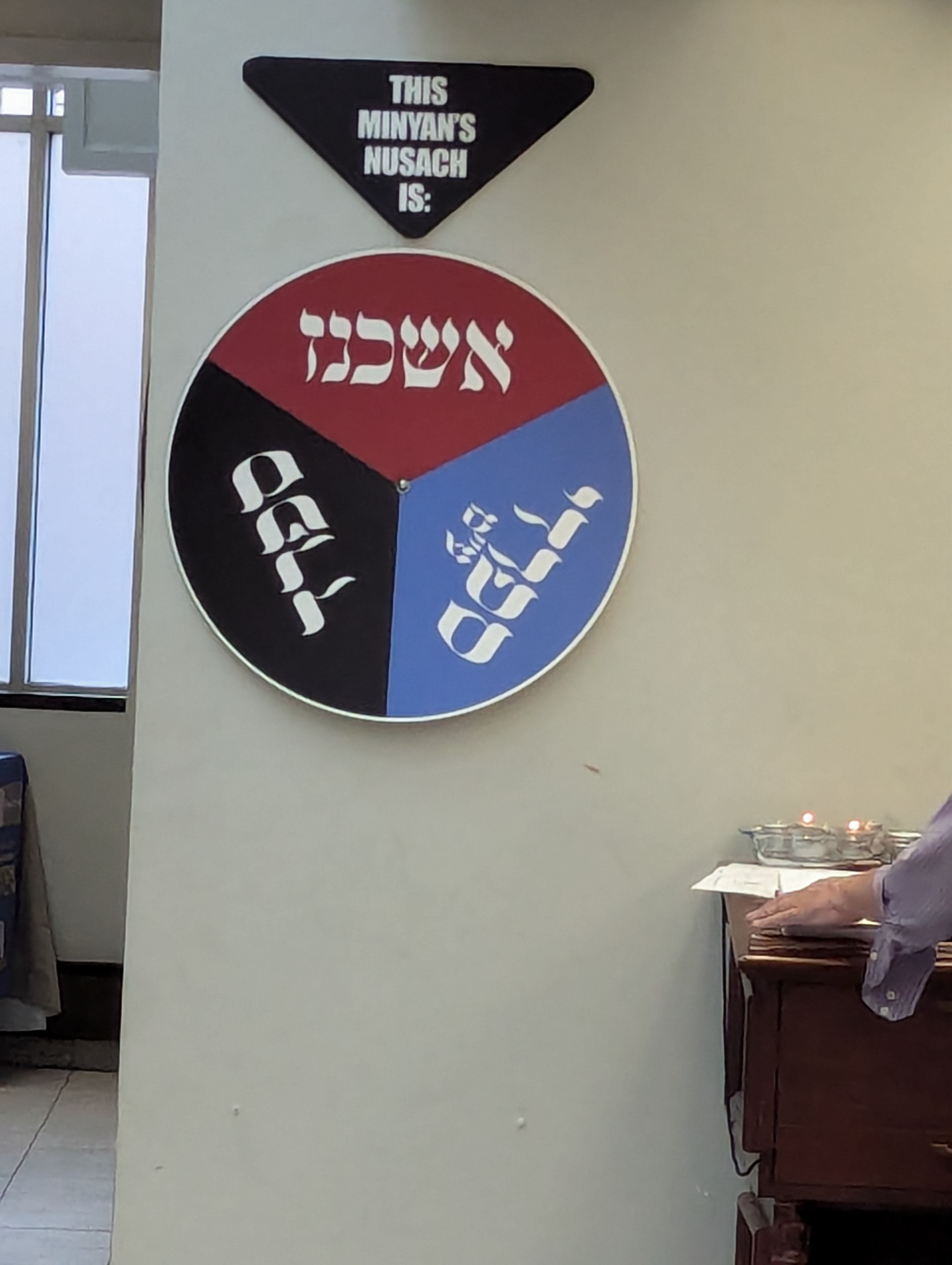
A renewed interest in Minhag Aschkenaz is emerging in the broader Jewish communities and Yekkes outside WH. It is manifested in various forms such as, in new minyanim in Lakewood and Passaic, a Kolel in Eretz with a very robust webpage (see icon above) and a thirst for research, three WhatsApp groups, a Google email by Professor Auman’s son in Israel, and several Facebook pages. I am not even mentioning my websites and social media among this, since I have very little minhag content on my site containing research or documentation. 

The minyan in Lakewood already has a periodical, as does the Kollel in Israel. The Whatsapp groups feature regular posts of Minhag-related shiurim from the Monk’s Shul in London and by the Israel Kollel. 

The Whatsapp group was begun by a Zurich IRG member living in England. While the content on that group is posted by admins only ( I am one, but rarely post), he has since opened a second group as an open forum. The chatter is constant and the group is slowly making its way through all the old topics – and some new ones. Some of it is minutiae and some of it is quite informative.

For many of us who carry the guilt of leaving the Heights upon our shoulders or the collective worry for its future, the question arises: Where does it all lead?

The main contribution among all of the chatter- in my opinion- is exposure to several communities abroad and the chance to learn a bit about them.

Is all the Minhag chatter minutia? I am not the one to say. I know that in every other community in Judaism today, there is an increased focus on Halacha and a mixing of cultures. People are even keeping other people’s Minahgim and Segulahs in our age of social media. Women in Teaneck are baking Challahs in the shape of a key, and people in Flatbush are flying to Uman. Should we not have a seat at the table?

There is rumbling this week about the possibility of opening an Aschkenaz minyan in Flatbush. So for all it is or isn’t, third-wave Aschkenaz is coming to a neighborhood near you!

Chanukah, Roedelheim, Tzitzis and More 

Chanukah has just passed. It passed slowly for me as I suffered most of it, and still do, from a bad cold.  

I make it my business each year to 1) use the Roedelheim for the Hadlakah 2) Try to go through some of the histories of the events of Chanukah 3) To incorporate different things into each night’s lighting (tunes, gifts, or a visit to someone, or a dreidel game.) 

This year, at the Seforim store I saw a packet of cards that had in Yiddish the claim to be “Authentic Chanukah Kvittelach”. This raised the curiosity of a guy like me. I especially wanted to know what the Jewish card game is. The deck was also manufactured in Vienna, by a Jewish company. So there is more old-world charm there. 

Well, I opened the deck and sent an email for the instructions. The deck has old-world charm, to be sure. But it is basically numbered cards from one to twelve, with no face cards (Queen, King, etc.) The rules are basically identical to Blackjack! (Maybe fully identical, I don’t remember all the small rules.) 

So…was I a fool? Maybe not. The Rupshitz’er Rebbe wrote great warnings to his Chasidim against their customary Chanukah card games. Besides the time and money lost at that table, he argues- (perhaps to appeal to a certain element of his adherents?)- that it is well known that the cards contain “names of Gd that are invoked in an unholy vein” and that exposure to this is injurious to one’s soul. 

I am not aware of what was written on playing cards of his era, or were these tarot cards perhaps? Or, does he mean the original King, Queen, Jack and Ace ? Do they have meaning in the dark side? In any case, with these cards (retailing at 17$ !) I can feel free of any satanic influences. 

When using the Roedelheim for Hadlakah you have the Nusach used in KAJ “Lehadlik Ner Shelachanukah” – with the two words combined into one word. This gives the numeric count of which followers of Arizal aim for (13). And, it is a point of grammar, according to Seligman Baer, it indicates the fact that this candle is reserved for the Mitzvah alone and is not for personal use like the Shabbos candles.  

Further, you have the Haneiros Halalu as per the Abuderham.  

This year on one night I used a Roedelheim that is special to me. It was printed in 1938 in Germany, although the address of I. Kaufmann printers in New York is already present on the back of the title page. It was the last of its kind and came from a foreboding moment in history. It also indicates that it was purchased from a seforim store in Berlin.  

Finally, I want to mention the words of the Sheltos, who writes that the Menorah is on the right, the Mezuzah on the left, and the “Ba’al Habayis” with a garment of Tzitzis in the middle! This year for the merit of a soldier in Israel I began to wear my Tzitzis out of my belt again. The history: 

Of course, I was not raised with this habit. It was not done by German Jews, and likely because there was a (legitimate) fear of arousing “rishis”. Rav Schwab zt’l was known to say that he “never saw his rebbe’s tzitzis.” Did he mean Rav Breuer zt’l? I think he meant Rav Yeruchom zt’l in the Mir. 

Years later as I went to large Yeshivahs I began wearing them out, maybe to “fit in”, or maybe because of the words of the Mishnah Berurah. I don’t remember.  

Then after several years in the Lakewood Yeshivah, I suddenly realized that the bochurim from the Mir Yeshivah on Ocean Parkway – whose grandfathers attended the Yeshivah in Poland (like Rav Schwab) and even went through the arduous and miraculous journey to Shanghai, were wearing their Tzitzis inside! I thought to myself: They are the reason you wear them out? And they wear them in? So, I tucked them back in.  

Now, I feel that soldiers have entered a very perilous area for the sake of removing a ruthless enemy. Many of them have put on Tzitzis for the first time. They are proud to wear this symbol of their Judaism. The world around us is looking at us now and wondering what to make of us. Victims? Perpetrators?  

I felt this was my time to affiliate with Mitzvos and our brothers in Eretz Yisroel. I hope these words inspire someone to do their own “thing” to connect them with our brothers afar and bring an extra mitzvah into their lives. That is why I wrote these lines. 

Calendar, Kissinger, and Photos

Here is a quick post since my fingers have been dormant since Sukkoth. 

First, we need to comment on the peculiarities of this year’s calendar: 

1) Mikeitz will NOT be Shabbos Chanukah. A rarity, indeed. 

2) Asarah B’teves will be on a Friday. Very rare to fast on Friday, and this is the only possibility- methinks. 

3) Tal Umotor (Sheiloh!) will be on the eve of the 5th of December, not the usual fourth. 

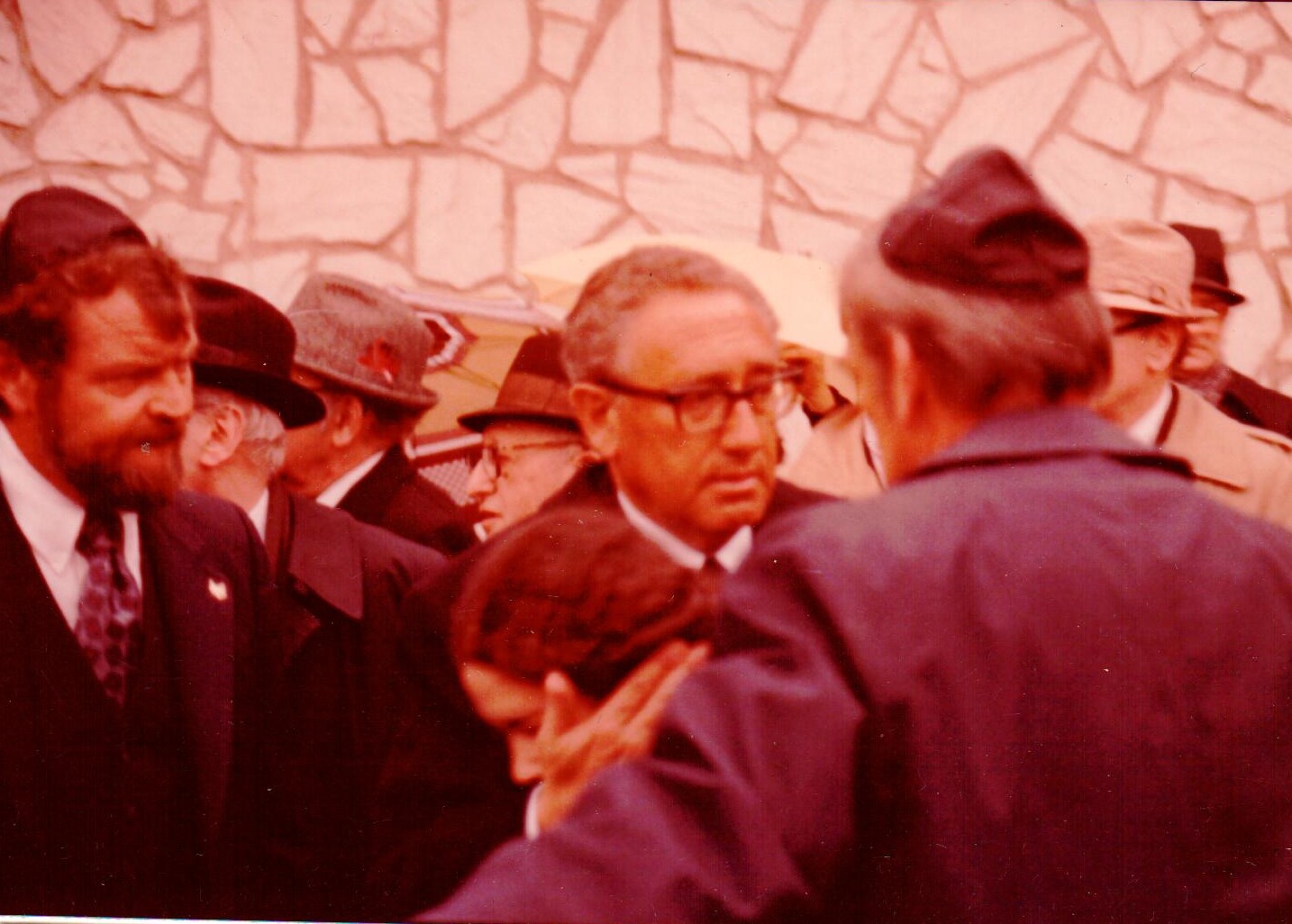
Now a word on Henry Kissinger. A bunch of years ago I made a video for the YouTube channel about his German-Jewish Orthodox roots. I thought it a novelty at the time. After all, the Secretary of State is perhaps the most powerful position in the U.S. government, and to think that someone who was raised in the same tradition as many of our parents- singing the same songs, and adhering to the same laws, would occupy that seat is truly interesting. 

Today I am a bit more mature and not bedazzled by the fact that he was “once” Orthodox. Or he “once” occupied a place in Breuer’s Shul. The irony is still worth mentioning, but the connection is meaningless.  (I mention this because I received several inquiries this week – and have seen much social media chatter- asking about the extent to which he walked among our local Orthodox circle.)

We keep our Torah – and I include the Minhogim, Nigunim, and Hashkafah – because we are Hashem’s nation. His servants, students, children, representatives, and advocates. We seek Hashem and hope to make the world a better, holier place. There are so few of us, and such a long history of triumph and survival that got us to where we are today. If someone has left that life, whether out of ignorance or disillusion, it is a loss to us, to the world, and to the person alone.  

I have no doubt that – for better or worse- this man was part of Hashem’s plans in moving history forward. But his shared history with our family is just that. History. It died a long time ago.  

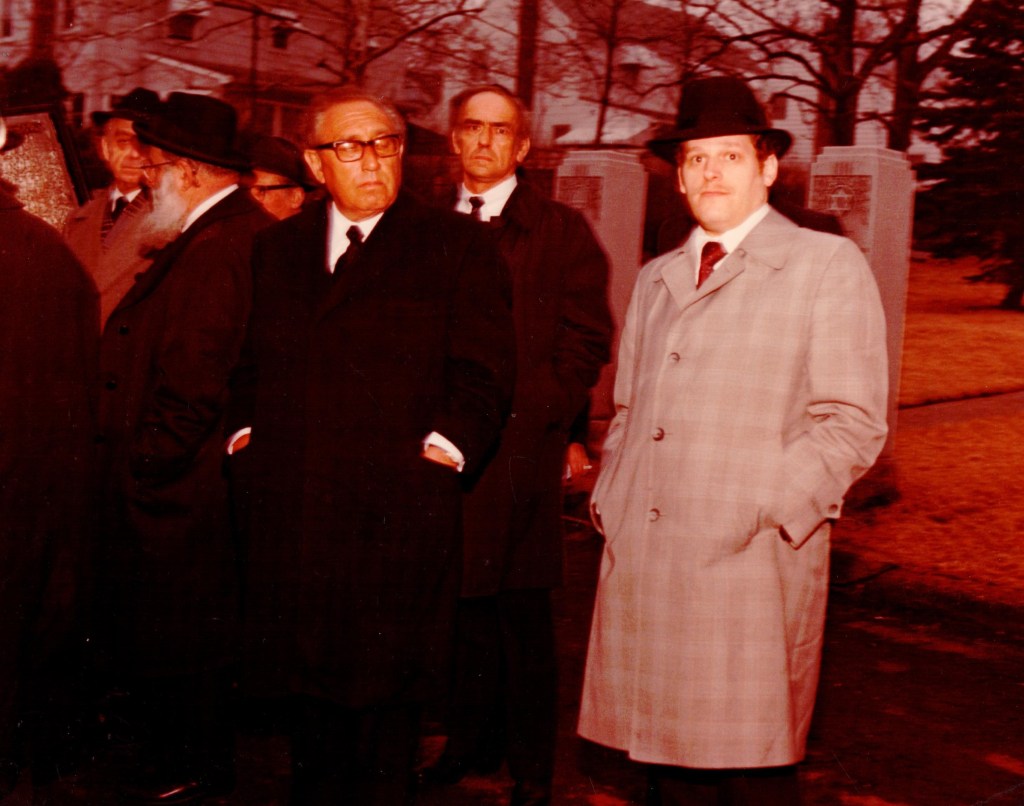
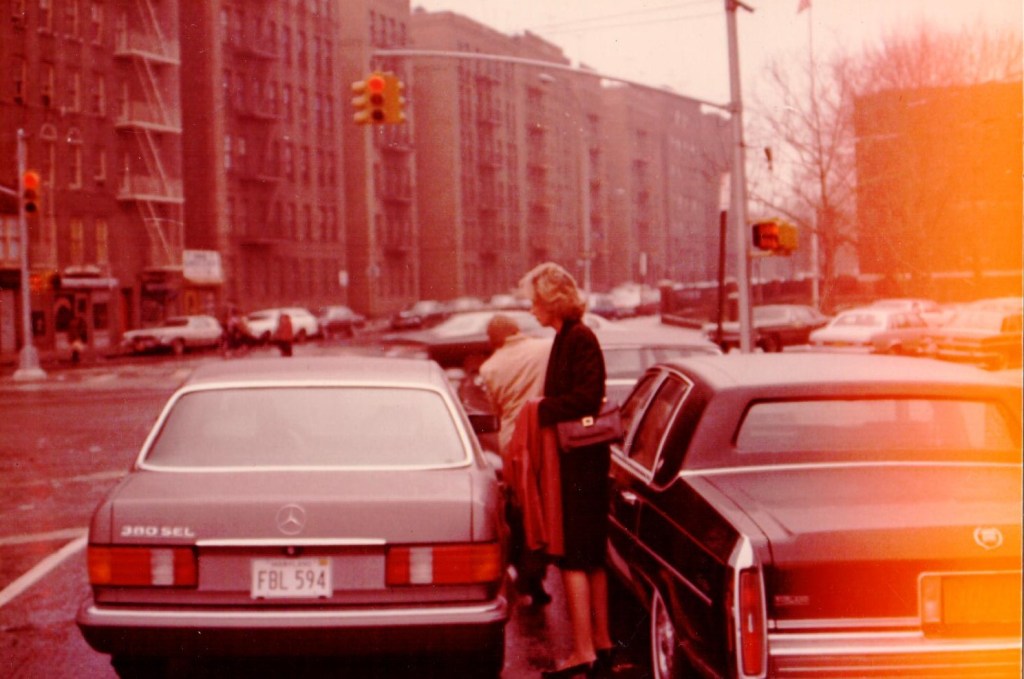
That said, the video showcased my father’s pictures of Henry at his father’s Levaya. See below.  

In front of Hirsch& Sons embracing his daughter at his father’s Levaya
At Clifton, next to Bobby G. H’lch.
Nancy Maginnes entering a car waiting for her outside the funeral home. His intermarriage created a dilemma for our Chevra at the time.
With Edwin z’l, Arnold Sulzbach z’l and members of the Secret Service
He and brother mentioned on the plaque for the servicemen of the Kehilla in WW2

Rosh Hashanah

This year will be a leap year. Beginning on Shabbos. The two variable months of Cheshvon and Kislev will be with only 29 days each. Pesach will fall on a Tuesday. The Siman will be therefore Zayin- ches- gimmel. 

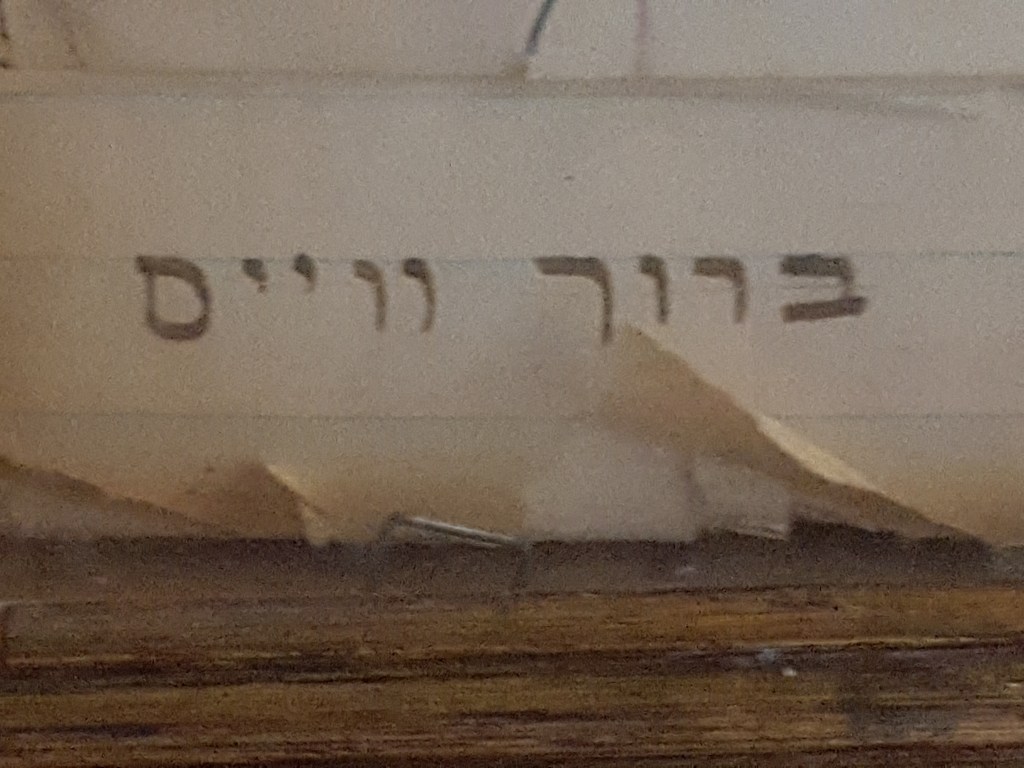
While on the calendar, we know that Mr. Benno Weis made a handwritten calendar that has hung in the elementary school hallway since forever. After many years he added to the calendar and the newer pages extend into a year that he never foresaw would come about and he would not have returned with Techiyas Hameisim. Or he could not see the ancient Kehilla would be here to celebrate that year. The calendar has about a decade left if I remember correctly. (Someone check, please. This is like our Mayan calendar moment.) 

A note about the Shofar blowing in our circles. I don’t have a recording of our Baalei Tekiah- except on the video of Rav Gelley’s installation in 1987. The shofar was blown and this is a clip of it. 

But a very odd and intriguing set of Shofar blasts is found on the album of Chazan Hans Bloemendahl z’l of the Netherlands. He has a very distinguished voice that is not unlike our own Chazan Frankel z’l- (Chazan Frankel admired Bloemendahl, had all of his records- I am told, and came from Hamburg just like Bloemendahl.)  

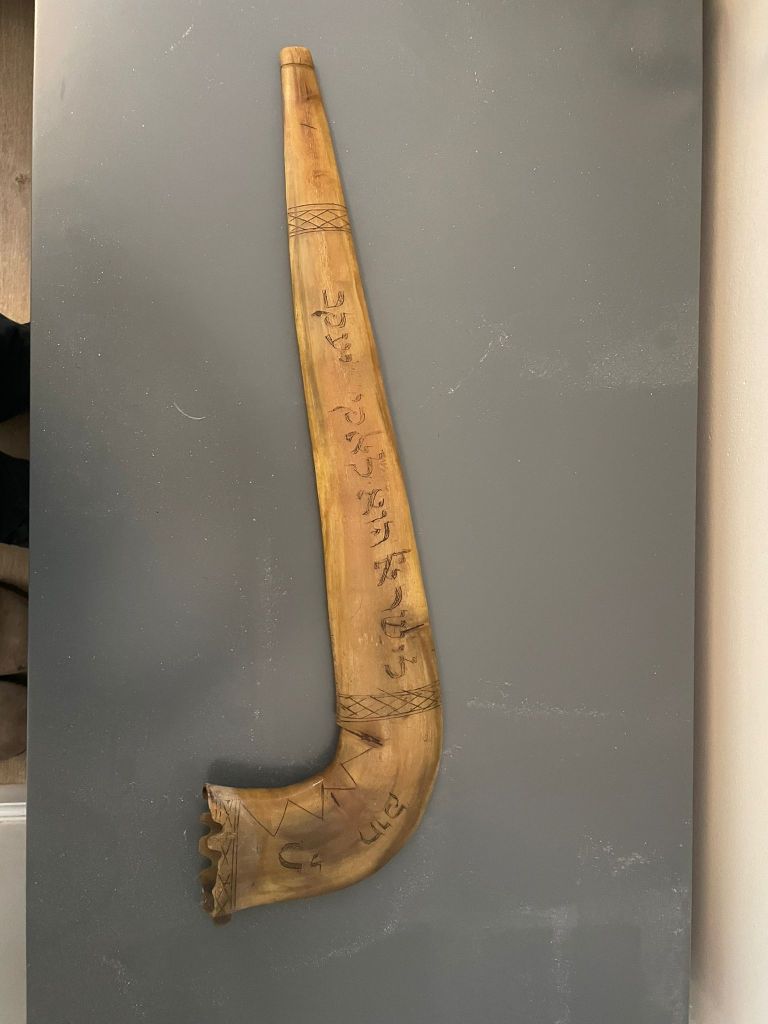
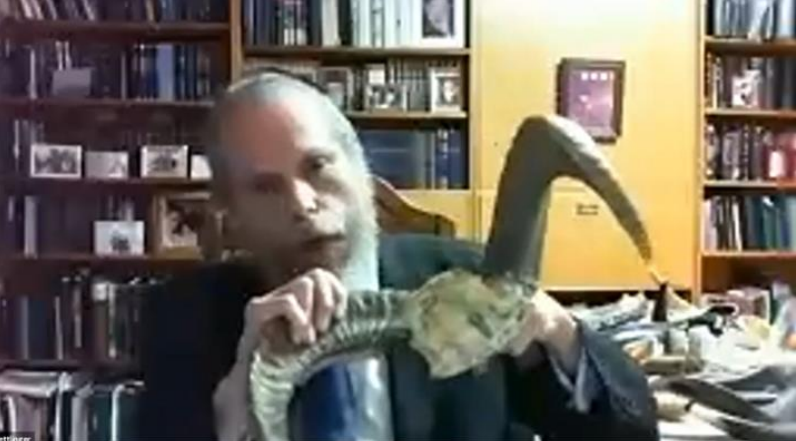
Anyhowwww, on the album there is a Shofar interlude that is just as haunting as the Tefillos recorded there. This Shofar has the sound of a clarinet, and all the years I have been listening to this I assumed that they just used an instrument on the album with some poetic license. This week I posted the recording on a forum of Nusach devotees, and two members of the forum who grew up in the Netherlands, both attested to the authenticity of the Shofar used in the recording and that a highly skilled Baal Tokeah was employed in Amsterdam. (They could not remember his name.) They also suggested – and attached a picture- that the Shofar had an extra wide mouth- which allowed for a greater variety of notes and sounds. Amazing!! Audio HERE.  

A Shofar of the Netherlands. Picture shared by Mr. Frank Levy

Elul in the Summer

(Photo credit: KAJN)

I don’t want to belabor writing about our Minhagim. But the most unusual nuance in our Tefllah cycle is – perhaps- the use of the tune for the Yomim Nora’im in the Kadish preceding the Amidah on the seven Shabasos between Tisha B’av and Rosh Hashanah. 

This Minhag makes our Shul the earliest harbinger of the Yom HaDin.  

The Baalei Mussar would famously tremble when announcing the Rosh Chodesh Elul. Sefardim begin the Selichos at Rosh Chodesh Elul itself. But all of these  people are not in the High Holiday spirit until…Elul. This particular Minhag has a way of saying, “Do not pay attention to the free society around you that tells you how your summer is meant to be all fun and games! You have a higher calling!” 

Of course, Tannersville did not close after Tisha B’av. But, the reminder is still built in to the summer. This message of the Bnei Aschkenaz being called to a higher calling- ahead or apart from others is echoed elsewhere in our lifestyle. 

First of all, the very nature of Torah im Derech Eretz is a call to acquire a balance in a difficult milieu. While others may apply themselves to learning or pursuing a career, TIDE asks each of us to see the entire question of how and when to balance Torah and Derech Eretz as a system that requires always being engaged in both. So Derech Eretz is not secular, and learning is not done in spite of DE, but as a way to master it. You as a Gemran Jew cannot just follow everyone else. You carry a responsibility 

I also think this spirit is found in some of the writings of our leaders z’l: 

1) In Rav Breuer’s essay “A Message to a Growing Youth”: (We were given this essay to read in high school when we made trouble.)  Rav Breuer zt’l has one line there. A real zinger. “When a friend comes over to you and makes a vulgar comment…you will turn away in contempt…because he seeks to cheapen that which you and he should hold sacred.” You have to be BETTER. 

2) In the essay “Trends in Our Kehillah”: Rav Breuer likewise tells the mispalelim that they need to be wary of blindly following other – trending- forms of Avoas Hashem. For instance, Shuckling. He point to the words of the Mishnah Berurah and reveals that standing still whie praying – as a humble servant- can lead to more concentration. And one shouldn’t assume that swaying is “better”. 

Regarding weddings, he points out that every Tzibur keeps it Minhogim, and we shouldn’t assume that we need to eschew our own. (He includes our “minhag” to have the wedding start on time.) 

 3) Then there were times in my childhood when my father would always tell me to be better than the “them”. This includes all the times he had me sit next to him for the Rav’s speech when other kids went out. (I went out many times too- just not always.) And when I planned on coming late to a wedding – I would say, “No one comes on time!?” “So YOU will be the one who comes on time”.  

You- hold yourself to a higher standard.  

Then this backfired once. For years my parents begged me to get Semicha while I learn in Yeshivah. Like many parents, they saw this as a type of degree. Finally, I countered with an argument that I was sure would work: “Dad”, I said, “In Yeshivah, only the stupid guys go for Semichah”.

It didn’t work. Dad retorted, “So you be the stupid guy!”  

Happy Summering! 

The Rabbonim in Dad’s photography. Part 2

In the previous installment we talked about my father’s three pictures of the Rabbonim in their seat at the front of Shul. (Here.) He never took this picture with Rav Mantel Shlita- although he had ample time and opportunity.

Here follow some interesting anecdotes about photos of the Rabbonim in more relaxed settings.

The picture of Rav Schwab zt’l on the cover of the Artscroll book. This picture is a mock-up painting made electronically from a picture my father shot at a private family affair on the occasion of the Rav’s 80th birthday in 1991.

The picture has been ordered many times over and was hung in the Yeshivah high-school. It is one of the few pictures of the Rav in which he is not smiling. Rav Schwab was very photogenic and generous with his smiles. But for this picture – which was a posed portrait with his wife- he does not smile (see photo above).

There is a lot to say about this, and I wrote about it somewhere. Smiling for a portrait is something that was, perhaps, an innovation of American culture. A way to show future generations your smile. If you have family heirloom pre-war photographs the subjects are always posed with a serious expression.

I would like to mention here that Mr. M Schwab- the Rav’s son – who is an exemplar of Kibud Av V’em, treated my father with utmost repsect. Firstly, he hired him whenever possible. He also had a standing request that he mail him any photos of his father and would receive remunerartions. After every interaction- a warm note would arrive in the mail with deep appreciation- the way members of our community often show their thanks!

An interesting footnote to this event. A very large family photo was arranged at the end of the festivities. There was one extended family member who was engaged to be married. My father felt that since she was not yet married the fiancé be left out of the picture. The particular family felt that he needed to be included since he was already like family. What happened? The engagement was broken and the young man needed to be airbrushed out of the photo.

Here’s more:

Rav Breuer zt’l lighting a cigar. My father tells how he was waiting for Mr. Jerry B. z’l in the apartment he shared with the Rav. My father was often at the apartment because Mr. B. employed him for two years as a messenger for his computer company when my father was between jobs. My father would sometimes see an interesting picture on the wall and take a photo of the photo in order to have a copy for himself. Anyhow, this time while waiting he saw the Rav enjoying a private moment in his study and he grabbed a picture of it. There is a lot of detail to see. (Of course, the Rav’s study has been preserved so these details can still be observed. ) The particular scene- the Rav lighting a cigar in his study, was also captured on movie and is viewable in the presentation dad made for the 1974 Yeshivah dinner. (Which I recently restored at great personal cost.)

Dad snuck a picture for history!

Rav Breuer and Rav Schwab enjoying a laugh- (several versions). This is a picture that has received wide dissemination. I believe it is my father’s and it was at an event in the Mt. Sinai Shul. A hearty smile on Rav Schwab’s face seems to be in response to something witty Rav Breuer just related. There are a few other pictures of the two Rabbonim in a light moment. One of which is ubiquitous- with a candle between them at a dinner table. I do not know the origin of the picture, and if it is my father’s. Others are less known but are out there.

This is a famous photo. But see below some other Rabbinic moments…

My father took a picture of Rav Gelley in Tallis and Tefillin giving the short Halacha after Shacharis. Bright morning sunshine fills the room beaming in through the Shul’s prominent eastern widows and gives a lot of life to the picture. A similar photo exists of – hibadel lichayim aruchim- Rav Mantel Shlita.

As a child of ten I visited our family in Basel. I remember seeing a  stout religious woman in her 40s or 50s exiting the grocery store with her packages, placing them in the bin of a moped, and then driving off. We never saw anything like this in America! An Oma on a motorcycle! My father told me the woman was from the Ehrlanger family and related to Rav Schwab. Well here is a similar picture. Rav Schwab spent summers at his son-in-law’s camp in Moodus, Connecticut.  My parents stopped by to visit once and the Rebbetzin gave my mother a tour on a golf cart. This was amusing to my father, so he snapped a picture!

For the record. My mother a’H kept a large file with pictures that people would enjoy on their home. These were enlargements ready to go. She always charged a fee- although she would ask the check to be writeen to the Yeshivah. This whole online project came about because someone requested a picture from my father, and he was about to ask a fee. I told him- in my insolence- that it was time to disseminate the collection. If there is someone today looking for a picture of our rich heritage- let’s get it to them without too many barriers. I am not from the old school of nicle-and-dime fundraising.

These are a Few of Our Favorite Things

Tell me you’re a Yekke.  

“I come on time”  

That is kind of cliche.  

Let’s talk about smaller things that unite us. 

(Besides, I’m not that good at coming on time.) 

So here goes… 

  1. Coming on time. There are many levels of this. You may not be good at this, but you may have a hard time when people totally ignore time. My father z’l always lectured us about coming on time. I I would tell him that the event I was going to never starts on time. He would reply, “So you be the first one there!” “Come early and then you can relax.” “These people are shluchs, don’t try to imitate them.” I can hear these commands as I type this now.  

There is a story in my family. A cousin married a Yemenite girl in Israel. Her parents lived in a remote town. They hosted Shabbos Sheva Brachos. My parents came early, the rest of the guests came right before Shabbos. When my parents arrived they found out that ALL the guests would share a large bedroom. This included several married couples and a young Kollel couple too! (Apparently, this family had not caught up with the century and thought they were still in Biblical Yemen!)  

Because my parents came early they told the family that none of the guests could stay together and arrangements were quickly made. They thereby saved a lot of people from an uncomfortable situation. 

  1. We like European type foods. (I think we do?) These include: Chocolate cakes with cherries in them. Coffee. Cinamonny Spicey cakes.  Cookies with Jelley in them. Coffee. Butter on fresh bread. The Mandlebroid with the candied fruit in them. Coffee. MAYONAISE on everything. (Except potato salad where it is conspicuously absent.) Radishes. Fruit soup. Insert your family’s thing here:_____________. Coffee. 
  2. We have some interesting types of people in our community that other communities don’t always have. This includes: People who know other people’s birthdays or Bar Mitzvah parshas decades later. People who call each other on very specific dates for many years. People who have been chavrusos for decades. People who have attended a shiur for decades. Grown men who still get bensched by aging parents.  
  3. We like order. How do I know? I have been to several Jewish communities in North America and Canada where I have walked in the Shul and found that the Gabai is a Yekke- or WH expatriate. I found a Wimple on the Torah in the Toronto Community Kollel. I was given an Aliyah in the YI of Hancock Park (LA) by an Eschwege.  I did an informal survey a while ago and received answers like: YI of Riverdale (Dr M Katzenstien HIR (L Metzger) Yereim of Detroit (Roberg) The White Shul (Bruckstien) Shomrei in Baltimore (Taragin/Froehlich) Bais Avigdor Flatbush (Rothschild) and perhaps more?